|
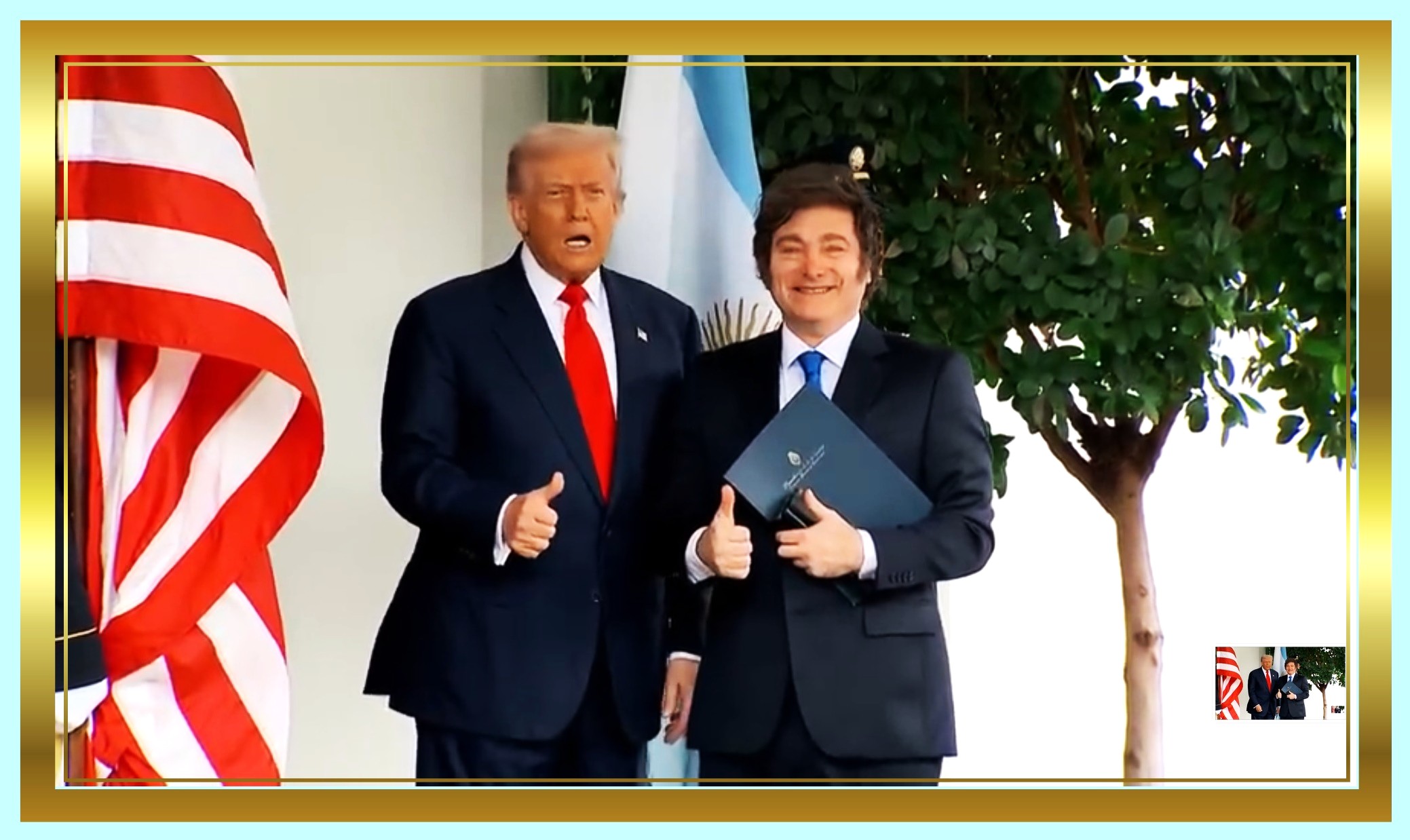
President Donald J. Trump and
President Javier Milei reaffirm the strategic alliance between the United
States of America (United States, or U.S.) and the Argentine Republic
(Argentina), grounded in shared democratic values and a common vision for free
enterprise, private initiative, and open markets.
In pursuit of a stronger, more
balanced economic partnership, the United States and Argentina have agreed to a
Framework to deepen bilateral trade and investment cooperation. This
Framework for an Agreement on Reciprocal Trade and Investment (Agreement) seeks
to drive long-term growth, expand opportunity, and create a transparent and
rules-based environment for commerce and innovation.
The outcome reflects the
countries’ shared ambition and values, and builds on actions Argentina has
already taken to modernize its trade and investment regime and foster
reciprocal conditions.
Key elements of the deal will
include:
- Tariffs:
The countries will open their markets to each other on key products.
Argentina will provide preferential market access for U.S. goods exports,
including certain medicines, chemicals, machinery, information
technologies products, medical devices, motor vehicles, and a wide range
of agricultural products. In recognition of Argentina’s ambitious
reform agenda and its trade commitments, and consistent with Argentina’s
compliance with relevant supply chain and economic security requirements,
the United States will remove the reciprocal tariffs on certain
unavailable natural resources and non-patented articles for use in
pharmaceutical applications. In addition, the United States may
positively consider the effect that the Agreement has on national security,
including taking the Agreement into consideration when taking trade action
under Section 232 of the Trade Expansion Act of 1962, as amended (19
U.S.C. 1862). Furthermore, the countries have committed to improved,
reciprocal, bilateral market access conditions for trade in beef.
- Elimination
of Non-Tariff Barriers: Argentina has
dismantled many non-tariff barriers that restricted access to its market,
including import licensing, ensuring a more level playing field for
international trade, and with this Agreement has committed not to require
consular formalities for U.S. exports to Argentina. Argentina will
also phase out the statistical tax for U.S. goods.
- Standards
and Conformity Assessment: Argentina is
aligning with international standards in sectors to facilitate
trade. Argentina will allow U.S. goods that comply with applicable
U.S. or international standards, U.S. technical regulations, or U.S. or
international conformity assessment procedures to enter Argentina without
additional conformity assessment requirements, and will continue to
eliminate non-tariff barriers that affect trade in priority areas.
Argentina will accept importation of vehicles manufactured in the United
States to U.S. Federal Motor Vehicle Safety Standards and emissions
standards, and will accept U.S. Food and Drug Administration certificates
and prior marketing authorizations for medical devices and
pharmaceuticals.
- Intellectual
Property: Argentina has taken action against
a major, notorious, regional market for counterfeit goods and will
continue to improve enforcement against counterfeit and pirated goods,
including in the online environment. Argentina has also committed to
address structural challenges cited in the Office of the United States
Trade Representative’s 2025 Special 301 report, including patentability
criteria, patent backlog, and geographical indications, as well as to work
towards aligning its intellectual property regime with international
standards.
- Agricultural
Market Access: Argentina has opened its market to
U.S. live cattle, committed to allow market access for U.S. poultry within
one year, and agreed not to restrict market access for products that use
certain cheese and meat terms. Argentina will simplify product
registration processes for U.S. beef, beef products, beef offal, and pork
products, and will not apply facility registration for imports of U.S.
dairy products. The United States and Argentina intend to work
together to address non-tariff barriers affecting trade in food and
agricultural products.
- Labor:
Argentina has reaffirmed its commitment to protect internationally
recognized labor rights. In addition, Argentina will adopt and
implement a prohibition on the importation of goods produced by forced or
compulsory labor and strengthen enforcement of labor laws.
- Environment:
Argentina has committed to take measures to further combat illegal
logging; encourage a more resource efficient economy, including in the
critical minerals sector; and fully implement the obligations of the World
Trade Organization (WTO) Agreement on Fisheries Subsidies.
- Economic
Security Alignment: Argentina will enhance
cooperation with the United States to combat non-market policies and
practices of other countries. The two countries have also committed
to identifying tools to align approaches to export controls, investment
security, duty evasion, and other important topics.
- Commercial
Considerations and Opportunities: Argentina and
the United States will cooperate to facilitate investment and trade in
critical minerals. The two countries also agreed to work toward
stabilizing the global soybean trade.
- Confronting
State-Owned Enterprises and Subsidies: Argentina
has committed to address potential distortionary actions of state-owned
enterprises and to address industrial subsidies that may have an impact on
the bilateral trading relationship.
- Digital
Trade: Argentina has committed to
facilitating digital trade with the United States by recognizing the
United States as an adequate jurisdiction under Argentine law for the
cross-border transfer of data, including personal data; and by refraining
from discrimination against U.S. digital services or digital
products. Argentina also intends to recognize as valid under its law
electronic signatures that are valid under U.S. law.
The United States and
Argentina will work expeditiously to finalize the text of the Agreement for
signature and undertake their respective domestic formalities in advance of the
Agreement entering into force.
The countries will review
implementation of the Agreement and continue close coordination on trade and
investment matters through the Trade and Investment Framework Agreement, and
the Innovation and Creativity Forum for Economic Development.
|

)
)
)
)
)
)
)
)
)
)
)
)
)
)
)
)
)