| |

|
|
|
|
Joint
Statement on a
United States-European Union
Framework on an Agreement on
Reciprocal, Fair, and Balanced Trade
The
White House | August 21, 2025
The United States and the European Union are pleased to announce that they have
agreed on a Framework on an Agreement on Reciprocal, Fair, and Balanced Trade
(“Framework Agreement”). This Framework Agreement represents a concrete
demonstration of our commitment to fair, balanced, and mutually beneficial
trade and investment. This Framework
Agreement will put our trade and investment relationship – one of the largest
in the world – on a solid footing and will reinvigorate our economies’
reindustrialization. It reflects acknowledgement by the European Union of the
concerns of the United States and our joint determination to resolve our trade
imbalances and unleash the full potential of our combined economic power. The
United States and the European Union intend this Framework Agreement to be a
first step in a process that can be further expanded over time to cover
additional areas and continue to improve market access and increase their trade
and investment relationship.
The key terms include:
1. The European Union intends to eliminate tariffs on all
U.S. industrial goods and to provide preferential market access for a wide
range of U.S. seafood and agricultural goods, including tree nuts, dairy
products, fresh and processed fruits and vegetables, processed foods, planting
seeds, soybean oil, and pork and bison meat. The European Union will
immediately take the necessary steps to extend the Joint Statement of the
United States and the European Union on a Tariff Agreement announced on August 21,
2020, with respect to lobster (that expired 31 July 2025), coupled with an
expanded product scope to include processed lobster.
2. The United States commits to apply the higher of either
the U.S. Most Favored Nation (MFN) tariff rate or a tariff rate of 15 percent,
comprised of the MFN tariff and a reciprocal tariff, on originating goods of
the European Union. Additionally, effective as of 1 September 2025, the United
States commits to apply only the MFN tariff to the following products of the
European Union: unavailable natural resources (including cork), all aircraft
and aircraft parts, generic pharmaceuticals and their ingredients and chemical
precursors. The United States and the European Union agree to consider other
sectors and products that are important for their economies and value chains
for inclusion in the list of products for which only the MFN tariffs would
apply.
3. The United States intends to promptly ensure that the
tariff rate, comprised of the MFN tariff and the tariff imposed pursuant to
Section 232 of the Trade Expansion Act of 1962, applied to originating goods of
the European Union subject to Section 232 actions on pharmaceuticals,
semiconductors, and lumber does not exceed 15 percent. When the European Union
formally introduces the necessary legislative proposal to enact the tariff
reductions set forth in Section 1 of this Framework Agreement, the United States
will reduce tariffs on automobiles and automobile parts originating from the
European Union subject to Section 232 tariffs as follows: No Section 232
automobile or automobile parts tariffs will apply to covered European Union
goods with an MFN tariff of 15 percent or higher; and for covered goods with an
MFN rate lower than 15 percent, a combined rate of 15 percent, comprised of the
MFN tariff and Section 232 automobile tariffs, will be applied. These tariff
reductions are expected to be effective from the first day of the same month in
which the European Union’s legislative proposal is introduced. The United
States expects the European Union’s legislative proposals will be consistent
with this Framework Agreement and enacted by the necessary legislatures. All
modifications to U.S. Section 232 tariffs will be executed in a manner that
reinforces and is consistent with U.S. national security interests. With
respect to steel, aluminum, and their derivative products, the European Union
and the United States intend to consider the possibility to cooperate on
ring-fencing their respective domestic markets from overcapacity, while
ensuring secure supply chains between each other, including through tariff-rate
quota solutions.
4. The United States and the European Union will negotiate
rules of origin that ensure that the benefits of the Agreement on Reciprocal
Trade accrue predominately to the United States and the European Union.
5. The United States and the European Union commit to
cooperate on ensuring secure, reliable, and diversified energy supplies,
including by addressing non-tariff barriers that might restrict bilateral
energy trade. As part of this effort,
the European Union intends to procure U.S. liquified natural gas, oil, and
nuclear energy products with an expected offtake valued at $750 billion through
2028. In addition, the European Union intends to purchase at least $40 billion
worth of U.S. AI chips for its computing centers. The European Union further
plans to work with the United States to adopt and maintain technology security
requirements in line with those of the United States. in a concerted effort to
avoid technology leakage to destinations of concern. The United States will
endeavor to facilitate such exports once such requirements are in place.
6. The United States and the European Union share one of
the world’s largest economic relationships, supported by mutual investment
stocks exceeding $5 trillion, and intend to promote and facilitate mutual
investments on both sides of the Atlantic. In this context, European companies
are expected to invest an additional $600 billion across strategic sectors in
the United States through 2028. This investment reflects the European Union’s
strong commitment to the transatlantic partnership and its recognition of the
United States as the most secure and innovative destination for foreign
investment.
7. The European Union plans to substantially increase
procurement of military and defense equipment from the United States, with the
support and facilitation of the U.S. government. This commitment reflects a shared strategic
priority to deepen transatlantic defense industrial cooperation, strengthen
NATO interoperability, and ensure that European allies are equipped with the
most advanced and reliable defense technologies available.
8. The United States and the European Union commit to work
together to reduce or eliminate non-tariff barriers. With respect to
automobiles, the United States and the European Union intend to accept and
provide mutual recognition to each other’s standards. Cooperation on standards
plays a crucial role in enhancing the transatlantic marketplace. The European
Union and United States commit to enhance opportunities for technical
cooperation between EU- and U.S.-domiciled standards development organizations
with the objective of identifying and developing standards for the
transatlantic marketplace in key sectors of mutual interest. The United States and the European Union
commit to facilitate conformity assessments to cover additional industrial
sectors.
9. Recognizing the importance of continued engagement to
resolve longstanding concerns, the European Union and the United States commit
to work together to address non-tariff barriers affecting trade in food and
agricultural products, including streamlining requirements for sanitary
certificates for pork and dairy products.
10. Recognizing that production of the relevant
commodities within the territory of the United States poses negligible risk to
global deforestation, the European Union commits to work to address the
concerns of U.S. producers and exporters regarding the EU Deforestation
Regulation, with a view to avoiding undue impact on U.S.-EU trade.
11. Taking note of the U.S. concerns related to treatment
of U.S. small and medium-sized businesses under the Carbon Border Adjustment
Mechanism (CBAM), the European Commission, in addition to the recently agreed
increase of the de minimis exception, commits to work to provide additional
flexibilities in the CBAM implementation.
12. The European Union commits to undertake efforts to
ensure that the Corporate Sustainability Due Diligence Directive (CSDDD) and
the Corporate Sustainability Reporting Directive (CSRD) do not pose undue
restrictions on transatlantic trade. In
the context of CSDDD, this includes undertaking efforts to reduce
administrative burden on businesses, including small- and medium-sized
enterprises, and to propose changes to the requirement for a harmonized civil
liability regime for due diligence failures and to climate-transition-related
obligations. The European Union commits
to work to address U.S. concerns regarding the imposition of CSDDD requirements
on companies of non-EU countries with relevant high-quality regulations.
13. The European Union reaffirms that U.S. conformity
assessment bodies can be designated as Notified Bodies in accordance with the
Sectoral Annex for Telecommunications Equipment to the Agreement on Mutual
Recognition Between the European Community and the United States (1998) to
carry out the tasks in relation to all essential requirements, including
cybersecurity, in the Radio Equipment Directive 2014/53/EU. In addition, the United States and the
European Union will commit to negotiate a mutual recognition agreement on
cybersecurity.
14. The European Union and the United States commit to
strengthen cooperation and action related to the imposition of export
restrictions on critical mineral and other similar resources by third
countries.
15. The United States and the European Union commit to
discuss high-standard commitments related to intellectual property rights
protection and enforcement.
16. The European Union and the United States commit to
work together to ensure strong protection of internationally recognized labor
rights, including with regard to the elimination of forced labor in supply
chains.
17. The United States and the European Union commit to
address unjustified digital trade barriers. In that respect, The European Union
confirms that it will not adopt or maintain network usage fees. The United
States and the European Union will not impose customs duties on electronic
transmissions. The United States and the European Union intend to continue to
support the multilateral moratorium on customs duties on electronic
transmissions at the World Trade Organization and seek the adoption of a permanent
multilateral commitment.
18. The European Union intends to consult with the United
States and U.S. traders on digitalization of trade procedures and
implementation of the legislation currently proposed on EU Customs Reform.
19. The United States and the European Union agree to
strengthen economic security alignment to enhance supply chain resilience and
innovation by taking complementary actions to address non-market policies of
third parties as well as cooperating on inbound and outbound investment reviews
and export controls, as well as duty evasion. This includes addressing
non-market practices, unfair competition, and lack of reciprocity in public
procurement with respect to third countries. The United States and the European
Union will cooperate on further implementation measures.
The United States and the European Union, in line with
their relevant internal procedures, will promptly document the Agreement on
Reciprocal, Fair, and Balanced Trade to implement this Framework Agreement.
------------------------------------------------------------------
The EU received the Nobel Peace Prize in 2012. The European Union (EU) is a supranational political and economic union of 27 member states that are located primarily in Europe. The union has a total area of 4,233,255 km2 (1,634,469 sq mi) and an estimated population of over 450 million as of 2025. The EU is often described as a sui generis political entity combining characteristics of both a federation and a confederation.
Containing 5.5% of the world population in 2023, EU member states generated a nominal gross domestic product (GDP) of around €17.935 trillion in 2024, accounting for approximately one sixth of global economic output. Its cornerstone, the Customs Union, paved the way to establishing an internal single market based on standardized legal framework and legislation that applies in all member states in those matters, and only those matters, where the states have agreed to act as one. EU policies aim to ensure the free movement of people, goods, services and capital within the internal market; enact legislation in justice and home affairs; and maintain common policies on trade, agriculture, fisheries and regional development. Passport controls have been abolished for travel within the Schengen Area. The eurozone is a group composed of the 20 EU member states that have fully implemented the EU's economic and monetary union and use the euro currency. Through the Common Foreign and Security Policy, the union has developed a role in external relations and defense. It maintains permanent diplomatic missions throughout the world and represents itself at the United Nations, the World Trade Organization, the G7 and the G20.
The EU was established, along with its citizenship, when the Maastricht Treaty came into force in 1993, and was incorporated as an international legal juridical person upon entry into force of the Treaty of Lisbon in 2009. Its beginnings can be traced to the Inner Six states (Belgium, France, Italy, Luxembourg, the Netherlands, and West Germany) at the start of modern European integration in 1948, and to the Western Union, the International Authority for the Ruhr, the European Coal and Steel Community, the European Economic Community and the European Atomic Energy Community, which were established by treaties. These increasingly amalgamated bodies grew, with their legal successor the EU, both in size through the accessions of a further 22 states from 1973 to 2013, and in power through acquisitions of policy areas.
The United Kingdom left from the EU in 2020 and no longer EU member however, ten countries are aspiring or negotiating to join it.
The EU received the Nobel Peace Prize in 2012.
|

|
White House, wikipedia, YAHOO, Youtube
August 24, 2025,
|
|
|
Fact Sheet:
The United States and European Union
Reach
Massive Trade Deal
July 28, 2025
MAKING GLOBAL HISTORY: Yesterday,
President Donald J. Trump announced a trade deal with the European Union (EU),
fundamentally rebalancing the economic relationship between the world’s two
largest economies.
- The
deal marks a generational modernization of the transatlantic alliance and
will provide Americans with unprecedented levels of market access to the
European Union.
- The
deal bolsters America’s economy and manufacturing capabilities. The EU
will purchase $750 billion in U.S. energy and make new investments of $600
billion in the United States, all by 2028.
- Through
decisive leadership and an unyielding commitment to American workers,
President Trump has delivered yet another agreement that positions the
United States as the world’s preeminent destination for investment,
innovation, and advanced manufacturing.
REACHING A HISTORIC TRADE
DEAL: President Trump’s agreement with the European Union
achieves historic structural reforms and strategic commitments that will
benefit American industry, workers, and national security for generations:
- The
United States and European Union reached a Cooperation Agreement on
Reciprocal, Fair and Balanced Trade.
- This
colossal deal will enable U.S. farmers, ranchers, fishermen, and
manufacturers to increase U.S. exports, expand business opportunities, and
help reduce the goods trade deficit with the European Union. The EU
will remove significant tariffs, including the elimination of all EU
tariffs on U.S. industrial goods exported to the EU, creating enormous
opportunities for American-made and American-grown goods to compete and
win in Europe. This new market access will drive growth across the
American economy—fueling exports, expanding production, and allowing
American businesses of all sizes to reach millions of new customers across
the Atlantic.
- As
part of President Trump’s strategy to establish balanced trade, the
European Union will pay the United States a tariff rate of 15%, including
on autos and auto parts, pharmaceuticals, and semiconductors. However, the
sectoral tariffs on steel, aluminum, and copper will remain unchanged—the
EU will continue to pay 50% and the parties will discuss securing supply
chains for these products. This new tariff regime will generate tens of
billions of dollars in revenue annually and help to close the longstanding
trade imbalance between the United States and Europe by encouraging local
sourcing, reshoring production, and ensuring that foreign producers
contribute their fair share to the American economy.
- Additional
key terms of the U.S.-European Union Agreement will include:
- Massive
EU Investment in the United States: The EU will
invest $600 billion in the United States over the course of President
Trump’s term. This new investment is in addition to the over $100 billion
EU companies already invest in the United States every year.
- Unleashing
American Energy: The EU will double down on
America as the Energy Superpower by purchasing $750 billion of U.S.
energy exports through 2028. This will strengthen the United States’
energy dominance, reduce European reliance on adversarial sources, and
narrow our trade deficit with the EU.
- Tariff
Barriers: The European Union will work with
the United States to eliminate tariffs in various sectors and will
provide meaningful quotas for other products, which when combined will
create commercially meaningful market access opportunities for a
significant amount of U.S. goods exports to the European Union,
supporting high-quality American jobs.
- Non-Tariff
Barriers for U.S. Industrial Exports: The
European Union will work to address a range of U.S. concerns related to
various EU requirements that are burdensome to U.S. exporters,
particularly small and medium-sized businesses, including through efforts
to eliminate the red tape that U.S. exporters face when doing business in
the European Union.
- Non-Tariff
Barriers for U.S. Agriculture Exports: The United
States and the European Union intend to work together to address
non-tariff barriers affecting trade in food and agricultural products,
including streamlining requirements for sanitary certificates for U.S.
pork and dairy products.
- No
Free Riders: The United States and the European
Union will establish strong rules of origin to ensure that the benefits
of this agreement flow directly to the United States and the European
Union, not to third countries.
- Barriers
for Digital Trade: The United States and the
European Union intend to address unjustified digital trade barriers. In
that respect, the European Union confirms that it will not adopt or
maintain network usage fees. Furthermore, the United States and the
European Union will maintain zero customs duties on electronic
transmissions.
- Economic
Security: The United States and the European
Union agree to strengthen economic security alignment to enhance supply
chain resilience and innovation. The two sides will take complementary
actions to address non-market policies of third parties, as well as cooperating
on inbound and outbound investment reviews, export controls, and duty
evasion.
- Commercial
Deals: The United States and European
Union recognize a series of major commercial agreements across key
sectors—including energy and semiconductors—that will further expand U.S.
exports to the European market.
- Military
Equipment: The European Union agreed to
purchase significant amounts of U.S. military equipment.
- President
Trump’s America First economic agenda is restoring our industrial might,
securing energy dominance, and making the United States the premier
destination for advanced manufacturing and industrial investment.
- In
just six short months, President Trump has reaffirmed the United States as
the world’s most attractive destination for investment and the unrivaled
leader in innovation, research, and advanced manufacturing.
- Other
American Presidents have tried and failed to reach a significant trade
deal with the European Union. With this latest deal, President Trump has
once again proven that bold leadership, economic strength, and unwavering
resolve deliver results no other leader could achieve.
LIBERATING AMERICA FROM UNFAIR
TRADE PRACTICES: Since Day One, President Trump challenged
the assumption that American workers and businesses must tolerate unfair trade
practices that have disadvantaged them for decades and contributed to our
historic trade deficit.
- On
April 2, President Trump declared a national emergency in response to the
large and persistent U.S. goods trade deficit caused by a lack of
reciprocity in our bilateral trade relationships, unfair tariff and
non-tariff barriers, and U.S. trading partners’ economic policies that
suppress domestic wages and consumption.
- President
Trump continues to advance the economic and national security interests of
the American people by removing tariff and non-tariff barriers and
expanding market access for American exporters.
- Today’s
announcement opens up historic market access to the second largest economy
in the world, reestablishing the strong positive long-term relationship
between the United States and its key ally the European Union.
|
|
WHAT THEY ARE SAYING:
Landmark U.S.-EU Trade Deal Is
Another Big Win for Americans
July 29,
2025
In a resounding triumph for
U.S. leadership, President Donald J. Trump’s monumental
trade deal with the European Union is being hailed by trade experts,
business leaders, and policymakers as a landmark win — positioning America at
the forefront of global commerce by expanding market access, cutting non-tariff
barriers, and fueling job growth in key sectors, including agriculture,
aviation, and energy.
Here’s what they’re saying:
CNN national
affairs correspondent Jeff Zeleny: “This is the biggest trade deal in
President Trump’s effort to effectively reshape the global trading order that
has been one of his central priorities since taking office in January. He has
been issuing many threats of tariffs, but they clearly have been working in
terms of bringing other countries — allies and adversaries alike, in some cases
— to the negotiating table.”
The Wall
Street Journal Editor-at-Large Gerry Baker: “Trump is challenging
the theory that tariffs are terrible for the global economy … The economy is
growing. Inflation is stable. The stock market is booming … He is a very, very
good dealmaker … It is a remarkable success.”
Commentator Ian
Bremmer: “The U.S.-EU breakthrough is, by far, the most significant of
those negotiations to date. It’s also a big win for the United States and for
President Donald Trump.”
Former U.S.
Secretary of Commerce Carlos Gutierrez: “On this deal [with] the European
Union, this is a big win for the U.S.”
Bloomberg
commentator Terry Haines: “It is a triumph of a lot of things. Certainly,
the President ought to take a victory lap. I think it ends up being good for
the European Union. It’s a blow against the conventional wisdom.”
Newsweek Senior
Editor-At-Large Josh Hammer: “[President Trump] comes home bagging one of
the greatest, most historic trade deals in the history of modern commerce. This
is truly historic stuff … I have never experienced, frankly, this much winning
from a president in my life.”
KPMG Chief
Economist Diane Swonk: “It’s s a win for the Administration.”
USA
TODAY columnist Nicole Russell: “President Donald Trump secured a
deal with the European Union this weekend that promises an extraordinary boon
for American workers.”
Airlines
For America: “We are grateful that both the Trump Administration and the
leadership of the European Commission understand the critical role aviation
plays in facilitating global commerce and connectivity. As a result, they have
agreed to zero-for-zero tariffs for all aircraft and component parts. The
zero-for-zero tariff regime will grow jobs, strengthen our economic security
and provide a framework for U.S. leadership in manufacturing and safety.”
American
Farm Bureau Federation President Zippy Duvall: “Trade is essential to the
success of America’s farmers and ranchers. Strong and enduring agreements help
connect U.S. farmers to global markets and Farm Bureau has long been a strong
advocate for leveling the playing field for American-grown products. We
appreciate that the administration is making agriculture a priority in ongoing
trade discussions. Opening new markets and working to strengthen existing
partnerships will help ensure U.S. farmers can continue leading the world in
producing safe, sustainable and affordable food for America’s families and
families around the world.”
American Iron
and Steel Institute President and CEO Kevin Dempsey: “AISI welcomes
the trade agreement announced today between the U.S. and the EU, which is one
of our country’s most important trading partners. We also appreciate President
Trump’s continued commitment to a strong and competitive American steel industry,
which is essential to America’s national security and economic
prosperity.”
American
Petroleum Institute: “We welcome @POTUS’ announcement of a U.S.-EU trade
framework that will help solidify America’s role as Europe’s leading source of
affordable, reliable and secure energy.”
Business
Software Alliance CEO Victoria Espinel: “The Business Software Alliance
welcomes the announcement of the trade deal between the United States and
European Union. It provides stability and predictability for transatlantic
digital commerce and fortifies our enormously important economic relationship.
BSA welcomes commitments by the US and EU to maintain no customs duties on
electronic transmissions and their intent to address barriers to digital trade.
Transatlantic cooperation on issues like streamlining regulation and
harmonizing technology and cybersecurity standards can help promote open
markets and ensure that Americans and Europeans alike are well-served by
cutting-edge technology.”
Corn Refiners Association
President and CEO John Bode: “Addressing trade issues with the European
Union has been a critical need for American agriculture for years, and we are
thrilled to see the Trump administration make progress with this important
market. We look forward to learning more about this agreement and seeing how
the EU will improve its standing as a trading partner for American farmers,
ranchers and agriculture manufacturers. A strong trade relationship between the
US and the 27 countries in the EU will benefit producers and consumers on both
sides of the Atlantic Ocean.”
Delta
Air Lines: “The US/EU trade agreement reached between President Trump and
EU leadership is welcome news given it preserves a zero-tariff environment on
aircraft and component parts, a reciprocal policy that’s been in place for over
40 years. This important step in the President’s trade negotiations will help
protect and continue to grow the role of air travel as a driver of U.S.
economic growth, innovation, and high-quality jobs, while protecting the $104
billion annual US trade surplus in the aerospace industry.”
Distilled
Spirits Council President and CEO Chris Swonger: “This is great news for
U.S. and EU relations and we greatly appreciate President Trump’s leadership.”
General
Aviation Manufacturers Association President and CEO James Viola: “We
commend the Trump Administration and EU Commission officials for working
together to support the civil aerospace supply chain and foster the health and
growth of the aerospace industry. The global success of the general aviation
manufacturing industry drives innovation, enhances safety and strengthens
economic opportunity. This deal, along with the previously announced US-UK
Economic Prosperity Deal, will help provide stability for the industry and
drive competitiveness. We are grateful that the Trump Administration has
acknowledged the value of a zero-tariff environment for civil aerospace with
these trading partners and urge the Trump Administration to further support for
the Agreement on Trade in Civil Aircraft with other trading partners.”
Growth Energy
CEO Emily Skor: “This is yet another example of this Administration’s
commitment to American energy dominance, and we applaud President Trump, USDA
Secretary Brooke Rollins, and U.S. Trade Representative Jamieson Greer for
putting rural America first in their trade negotiations. This latest trade deal
with the EU will deliver concrete benefits to the American ethanol industry and
to the rural communities it supports. It has the potential to unleash a new era
of transatlantic trade partnerships and to enhance what’s already one of the
ethanol industry’s strongest trade relationships.”
Information
Technology Industry Council President and CEO Jason Oxman: “The EU-U.S.
economic relationship is critically important to millions of workers,
businesses of all sizes, and diverse sectors on both sides of the Atlantic.
We’re pleased to see the U.S. and EU find a path forward to help open markets,
deescalate trade frictions, and reach a successful deal that will restore
business stability. We look forward to reviewing the details and engaging with
both governments to strengthen the transatlantic relationship.”
National
Business Aviation Association President and CEO Ed Bolen: “NBAA applauds
the administration’s decision to return to the zero-for-zero tariff agreement
for aircraft and component products traded between the United States and the
European Union. This decision restores a level playing field on trade, allowing
for further innovation in aerospace, securing America’s global aerospace safety
leadership and growing the exceptional trade surplus the U.S. has enjoyed in
the sector for decades.”
National
Cattlemen’s Beef Association Executive Director of Government Affairs Kent
Bacus: “NCBA greatly appreciates the Trump Administration’s commitment to
addressing the numerous non-tariff trade barriers that restrict U.S. beef
access in the European Union. NCBA stands ready to work with President Trump in
full support of securing objective, risk-based, science-based terms of trade
with Europe.”
National
Grain and Feed Association President and CEO Mike Seyfert: “NGFA
appreciates President Trump’s tireless efforts to expand international markets
for U.S. agriculture, and we applaud the announcement of a trade deal framework
with the European Union. This is a meaningful step forward in opening one of
the world’s most restrictive markets to American producers.”
National Marine Manufacturers
Association President and CEO Frank Hugelmeyer: “We applaud President Trump
and the European Union for reaching an agreement that protects U.S.
recreational boats and engines from additional retaliatory tariffs. The United
States is the world’s largest recreational boating market. Preserving access to
global markets is essential to sustaining the $2.3 billion in annual exports of
U.S. boats and marine engines. We appreciate today’s outcome, which represents
a shared commitment to business certainty and a stable trading relationship.”
Renewable Fuels
Association President and CEO Geoff Cooper: “We thank President Donald
Trump and European Commission President Ursula von der Leyen for reaching this
important agreement over the weekend, and we are encouraged to see U.S. ethanol
mentioned as part of the deal. As our nation’s corn growers prepare for what is
likely to be a record harvest, we stand ready to produce larger volumes of
cleaner-burning ethanol and valuable co-products like distillers grains for
customers around the world. When markets are open and trade policies are fair,
everybody wins. The U.S. ethanol industry looks forward to working with our
partners in Europe to continue growing the global production and use of
renewable fuels, which are simply more reliable and more affordable than many
other energy alternatives.”
Software
& Information Industry Association President Chris Mohr: “We
congratulate President Trump and EU Commission President von der Leyen on the
framework agreement that was reached yesterday. A trade war between the world’s
two largest economies would have benefitted neither side. In our engagements
with U.S. and EU officials, we have been adamant about the need to find
constructive ways to address the concerns of our members related to EU digital
regulations, such as the Digital Markets Act. We look forward to continuing
those conversations in the weeks ahead.”
Steel
Manufacturers Association President Philip Bell: ”The Steel
Manufacturers Association applauds President Trump’s announcement of a historic
framework for a trade deal with the European Union, keeping his vow to put
America first. By crafting a deal with the E.U. that opens market access,
ensures American-made energy will power Europe, drives substantial investments
in the U.S., and boldly maintains the national security tariffs on steel,
President Trump has made America stronger.”
U.S.
Grains Council President and CEO Ryan LeGrand: “The Council thanks
President Trump, the USDA and the USTR for continuing their tireless effort to
bring about fair trade between the U.S. and the EU. This deal promises to build
upon long-established trade with our eighth largest grains-in-all-forms trading
partner worth more than $1 billion in the 2023-2024 marketing year.”
U.S.
Meat Export Federation President and CEO Dan Halstrom: “USMEF thanks
the Trump administration for prioritizing agricultural market access in
negotiations with the EU and with other key trading partners. We are pleased to
see that the U.S. and EU intend to work together to address non-tariff barriers
inhibiting agricultural trade. The U.S. is a net importer of red meat from the
EU due to the vast barriers the EU imposes on imports. EU imports of U.S. red
meat totaled just $245 million in 2024, mostly beef, while the U.S. imported
$698 million worth of red meat (mostly pork) from the EU. Addressing the EU’s
tariff and non-tariff barriers is essential to enabling U.S. export growth.”
|
|
DEALMAKER-IN-CHIEF:
President Trump Secures
Landmark Peace, Trade Deals
July 28,
2025
President Donald J. Trump
never stops working for the American people — and that was on full display this
weekend in Scotland, where President Trump secured two major victories in his
relentless pursuit of peace and prosperity.
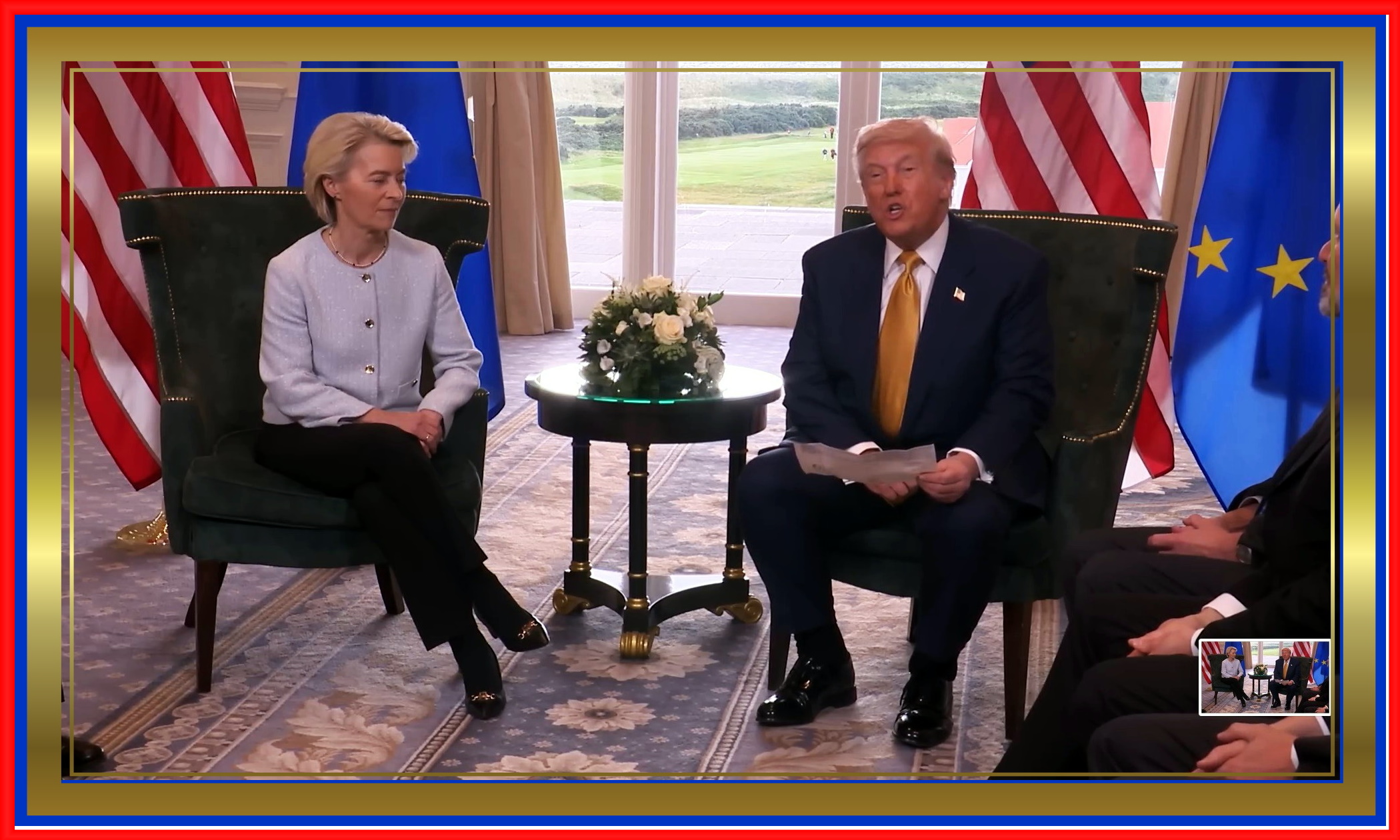
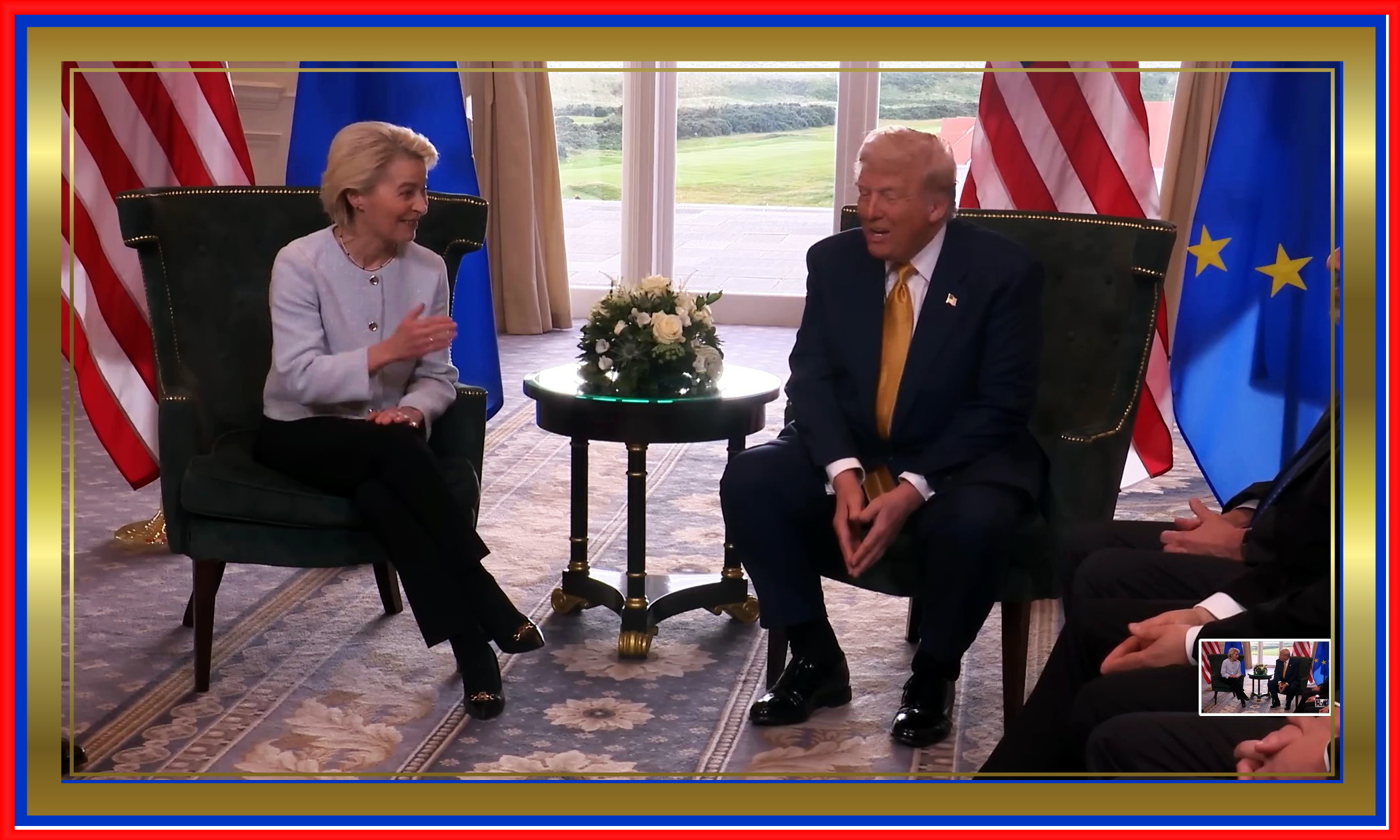
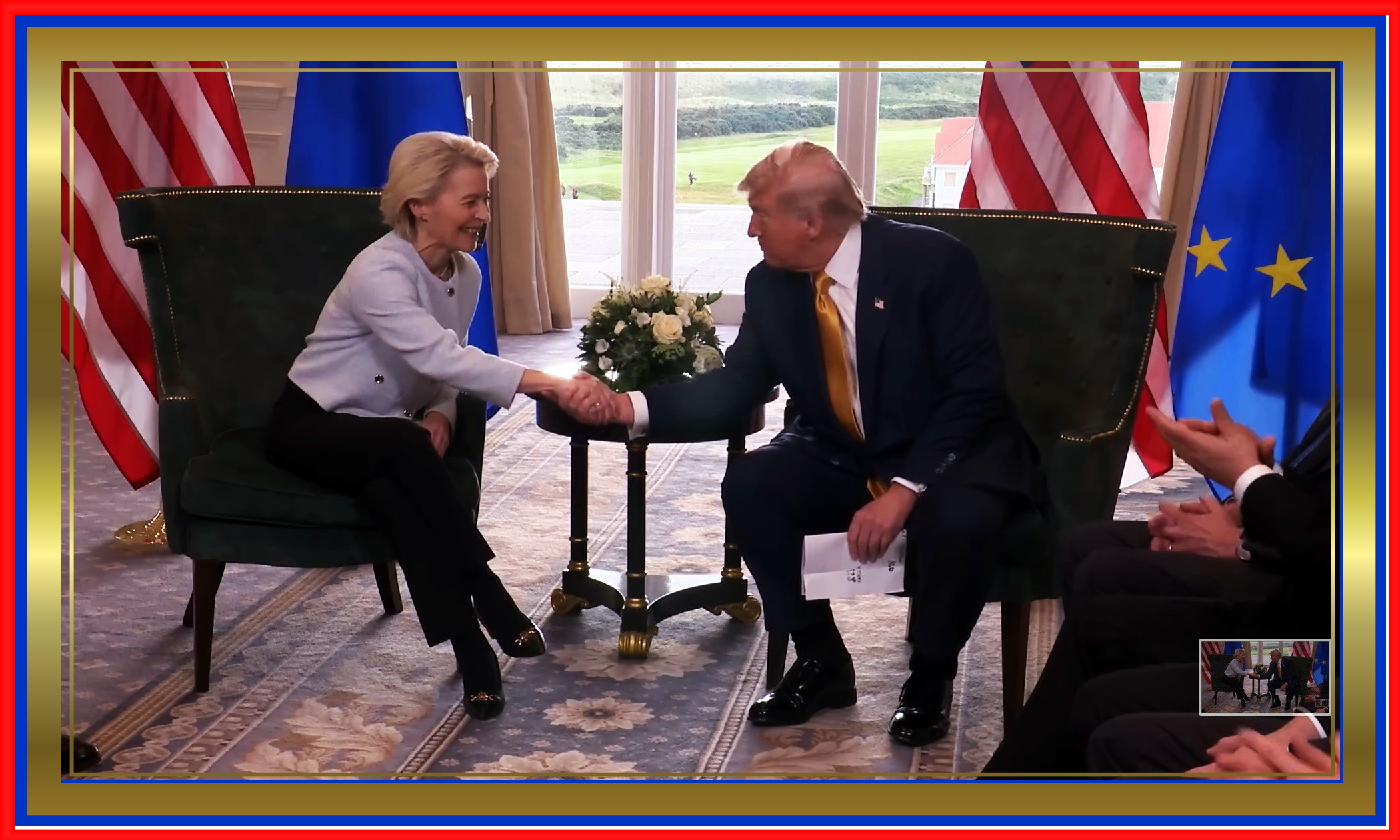
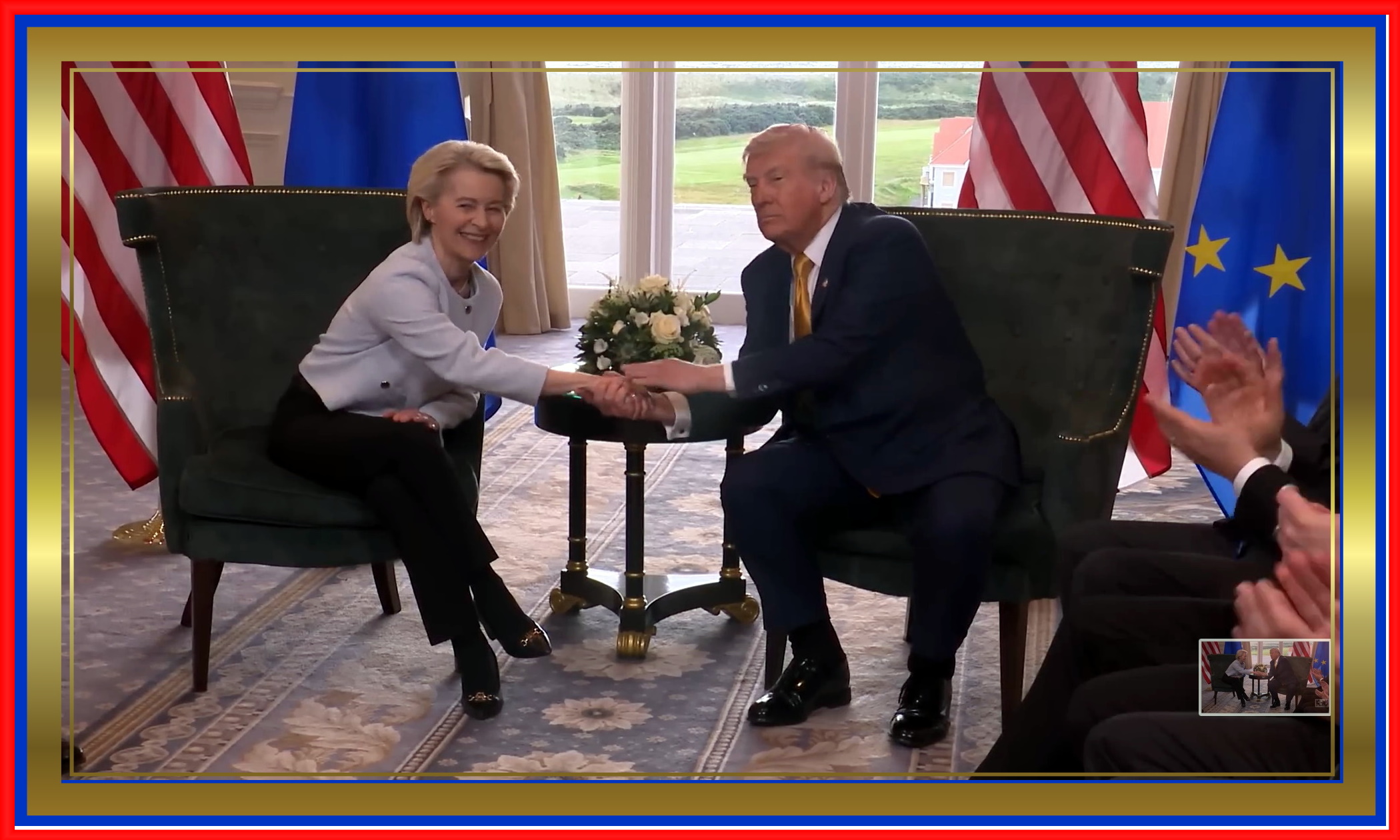
President Trump negotiates a
landmark trade deal with the European Union.
In Scotland, President
Trump announced a
monumental trade deal with the European Union — finally addressing the enormous
trade deficit, securing
new market access, clinching hundreds of billions of dollars in
new U.S. investment, and much more.
The move was immediately
hailed — both internationally and domestically —
as a “big
win”
and “victory” for
the Trump Administration and the U.S.
They said it couldn’t be done
— and President Trump did it.
President Trump brokers peace
between Cambodia and Thailand.
After President Trump spoke
with leaders of Thailand and Cambodia, the
two countries announced an
“immediate and unconditional ceasefire” — leveraging their trade relationships
with the U.S. as incentive to do so.
It’s only the latest instance
of the Trump Administration’s pursuit of peace around the world after similar
efforts brokered peace between Israel
and Iran, Rwanda
and the Democratic Republic of the Congo, India
and Pakistan, Egypt and Ethiopia,
along with the historic peace agreements from his first term — including
with Serbia
and Kosovo and the Abraham Accords.
|

|
White House, Youtube, FOX NEWS, ABC NEWS, MBC, DW, YAHOO, Fox 9, The Hill, Wikipedia, NATO, WhiteHouse, wikipedia, BBC, Reutter, Youtube, Fox,, X
July 28, 2025, Rev. July 29, 2025, Rev. August 24, 2025
|
|
|
)
)
)
)
)
)
)
)
)
)
)
)
)
)
)
)
)
)
)
)
)
)
)
)
)
)
)
)
)
)
)
)
)
)
)
)
)
)
)
)
)