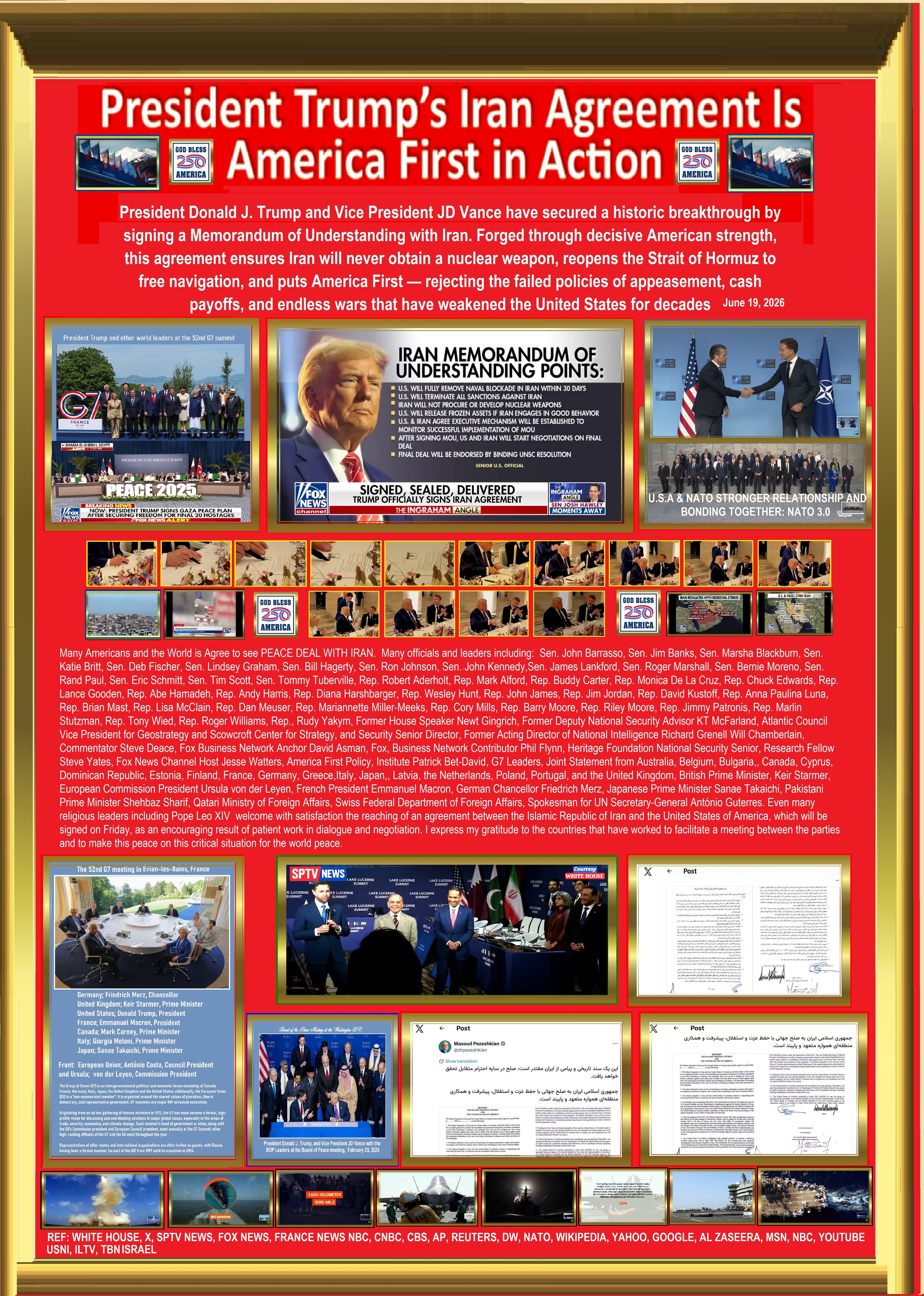
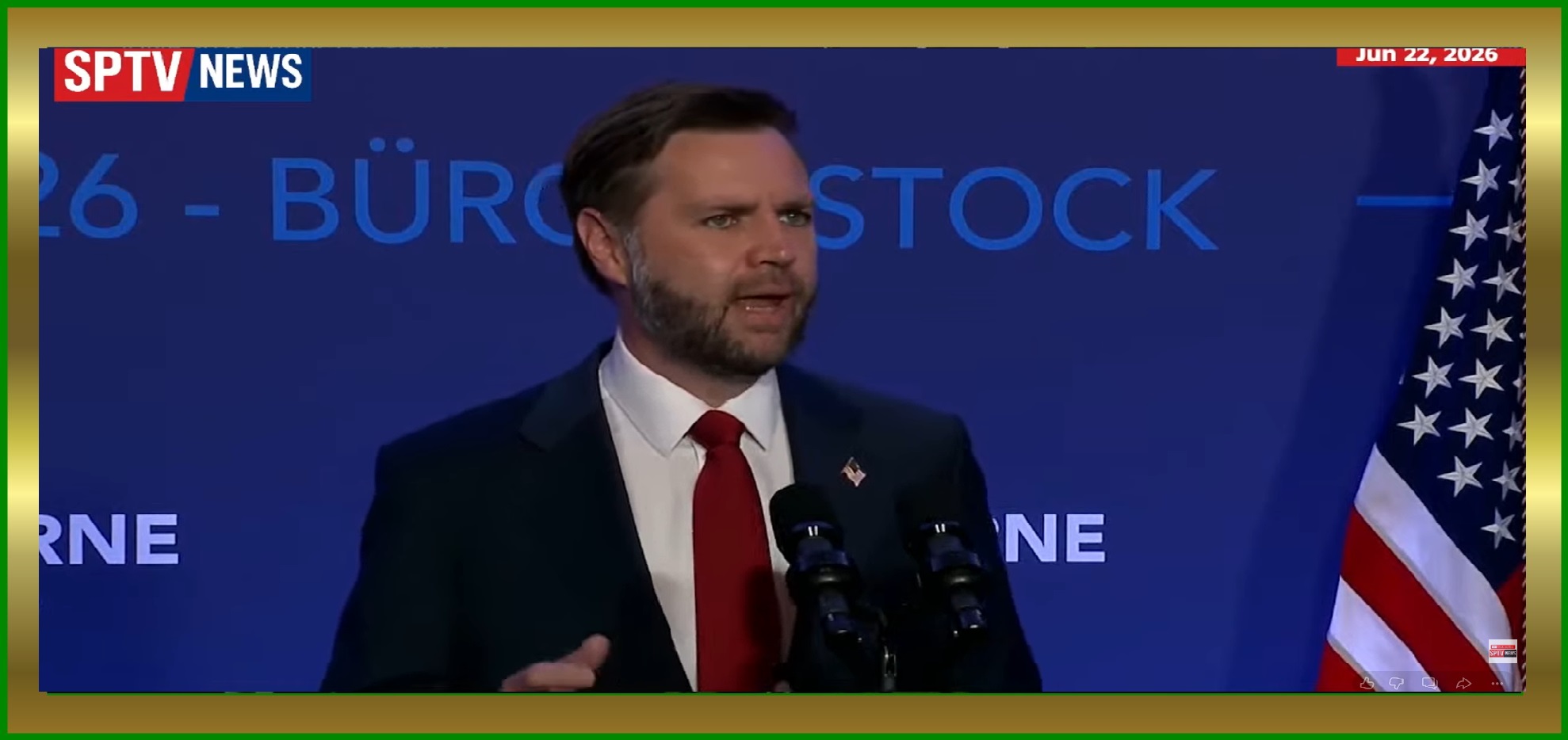
President Donald J. Trump and
Vice President JD Vance have secured a historic breakthrough by signing a
Memorandum of Understanding with Iran. Forged through decisive
American strength, this agreement ensures Iran will never obtain a nuclear
weapon, reopens the Strait of Hormuz to free navigation, and puts America First
— rejecting the failed policies of appeasement, cash payoffs, and endless wars
that have weakened the United States for decades.
Here’s what they’re saying:
Sen. John
Barrasso: “@POTUS Trump forced Iran to the table from a position of
American strength. He has been clear:
Iran will not get a nuclear
weapon
They will not have a path to a
weapon
They are not going to be able
to enrich uranium
America is putting an end to the terrorism.”
Sen. Jim
Banks: “Iran has been decimated. They know what will happen if they don’t
hold-up their end of the deal and there will be hell to pay. Under @POTUS, we
operate with Maximum Pressure and Peace Through Strength.”
Sen.
Marsha Blackburn: “President @realDonaldTrump has shown time and time again
on the world stage that he is determined to find peace and that his first
priority will always be to put America first.”
Sen. Katie Britt:
“There is no one better at making a deal than @POTUS. I appreciate this
Administration’s efforts to hold the Iranian regime accountable and ensure they
can never obtain a nuclear weapon.”
Sen. Deb Fischer:
“Iran is weak right now, and @POTUS is negotiating from a position of strength.
I support the administration’s efforts to keep Iran from ever obtaining a
nuclear weapon—which is crucial to keeping America and the world safe.”
Sen. Lindsey
Graham: “[I]t is my opinion that signing the MOU will be beneficial to the
United States, in as much as the Strait of Hormuz will begin to open, and the
hostilities with Iran will stop. Whether or not the United States can reach an
acceptable, verifiable deal with Iran regarding its nuclear program and other
issues is yet to be determined, but I see little downside to trying. The
economic stability that comes from opening up the Strait and the cessation of
hostilities could create a pathway to peace well beyond the Iranian conflict.
The expansion of the Abraham Accords and normalizing relations between Saudi
Arabia and Israel is President Trump’s and my ultimate goal. I think that is
best achieved by creating economic stability for the United States, the region and
the world, as well as the cessation of hostilities. The signing of the MOU is
an essential step to make that happen and thus it is worthwhile.”
Sen. Bill
Hagerty: “Where President Obama paid Iran for their nuclear program, @POTUS
is making them pay to end it. After we decimated their military and nuclear
capabilities, the world’s most infamous state sponsor of terrorism is finally
coming to the table—this time, on President Trump’s terms.”
Sen. Ron
Johnson: “The ayatollahs declared war on the West 47 years ago. They are
fanatics who have been engaging in and preparing for war all that time.
President Trump recognizes the reality that the Iranian people were not able to
overthrow the regime and that Americans would not support a ground war to
defeat it. So @POTUS made a deal to open the Strait of Hormuz to limit economic
damage and carefully monitor the regime’s behavior moving forward.”
Sen.
John Kennedy: “Let’s give peace a chance. I think that’s all the President
is saying. I read the document last night, and I’ve heard all of the
speculation, and what about this, and what about that, and what if this
happens, one, if that doesn’t happen, we’ll know in 60 days. Let’s give us 60
days to give peace a chance, and that’s all he’s saying.”
Sen. James
Lankford: “For 47 years, Iran has attacked the United States, our allies,
and every American they could find in the region. The people of Iran live under
the oppression of the regime, and the United States has spent billions of
dollars each year defending ourselves from the threat. For over four decades,
every president has attempted to resolve the multitude of issues with Iran, but
President Trump is the first to use both diplomacy and force to bring the
terrorist regime to the table. Let’s pray for peace and an end to the nuclear
threat from the world’s largest state sponsor of terrorism.”
Sen.
Roger Marshall: “Americans deserve affordable gas and groceries, and this
agreement accomplishes just that. Beyond that, and more importantly, Americans
are safer today than they were before. This regime has never signed a document
that said that they would not have any nuclear weapons in the past — that was
our goal out of all this. This regime is responsible for the deaths of over
1,000 Americans, they cause the rest of the world to live in fear, so in so
many ways, the world is safer, Americans are safer. The Strait is open again,
and gas prices are plummeting — so we think it is a great day here in America.”
Sen. Bernie
Moreno: “President Trump is the only one who had the guts to take decisive
action and eliminate a threat we’ve faced for 47 years. Now he’s secured a
historic deal that allows for peace and prosperity. Peace through strength”
Sen. Rand Paul:
“The same voices now attacking Trump’s Iran deal are the architects of every
failed intervention of my lifetime. This war must end. I stand with President
Trump on peace.”
Sen. Eric
Schmitt: “President Trump was very clear from the get-go what the mission
here was, which was to ensure that Iran would never have a nuclear weapon. They
have no ability to do that — and they’re signing on the dotted line now for the
first time that they’re not going to do that… We need to make sure, obviously,
we’re verifying all of this — but the President has pulled off something here
that most experts six months ago wouldn’t have thought was possible, and I
think it’s good for the American people.”
Sen. Tim Scott:
“Once again, @POTUS proves he is the Dealmaker in Chief. When America leads
with strength, we get results. A major victory for American security and global
stability!”
Sen. Tommy
Tuberville: “As per usual, the Legacy Media are trying to undermine the
administration. If there’s one thing @POTUS has shown time and time again, it’s
to NEVER bet against Donald J. Trump. President Trump made history in 2020 with
the Abraham Accords, and I have no doubt that he will once again secure PEACE
for America and our allies.”
Rep. Robert
Aderholt: “I’m thankful to hear that the United States and Iran have
reached an agreement. The deal will reopen the Strait of Hormuz and require
Iran to give up its nuclear program. Unlike the agreement reached under the
Obama administration, this deal will not allow Iran to continue enriching
uranium and build up the components necessary to build a nuclear weapon. I
applaud President Trump for his leadership and the brave men and women of our
Armed Forces who have held the line.”
Rep. Mark Alford:
“Let me be clear—this started 47 years ago with the Iranian hostage crisis, the
fall of that regime, and the rise of leaders in Iran who have been hostile to
the United States and Western civilization ever since. And thank God we finally
have a president who is standing up to them—with strength, with resolve, &
putting Americans first.”
Rep. Buddy
Carter: “FORTY-SEVEN years of concessions to the Iranian Terrorist Regime
and SEVEN U.S. presidents later… Only ONE President, @realDonaldTrump, is
ensuring Iran never obtains a nuclear weapon. America and the world are safer
because of it – PEACE THROUGH STRENGTH!”
Rep. Monica
De La Cruz: “Thank you, President Trump, for your tireless work to deliver
this historic deal and secure peace worldwide”
Rep. Chuck
Edwards: “This agreement has the potential to bring greater stability to
the Middle East, a win for America, our allies, and the world.”
Rep. Lance Gooden:
“President Trump knows that peace with Iran comes through strength, not pallets
of cash. The Iranian regime will NEVER have a nuclear weapon or enriched
uranium under a Trump deal. @POTUS’s pursuit of lasting peace in the Middle
East means a safer world and a stronger economy at home!”
Rep. Abe Hamadeh:
“@POTUS has made it crystal clear: he wants this Iran conflict over, & he’s
been working tirelessly to de-escalate & bring the parties to the table.
Never underestimate the man who mastered ‘The Art of the Deal.’ President Trump
always puts America’s interests first.”
Rep. Andy
Harris: “A remarkable day for America and the world. President Trump
secured a historic agreement with Iran, bringing an end to the conflict and
demonstrating once again that peace is achieved through strength.”
Rep. Wesley
Hunt: “Take it from someone who actually fought in these wars. Getting the
Gulf states aligned against Iran’s nuclear ambitions is a game changer. And
that’s the key point: the world wants peace, but peace is only possible when
rogue regimes understand there are consequences for their actions. In just a
matter of months, President Trump brought Iran to a position it never imagined
it would be in. Its military capabilities are shattered, its leverage
evaporated, and its leaders were forced to confront reality. The result is an
agreement designed to ensure Iran does not obtain a nuclear weapon for the
foreseeable future. American strength achieved the outcome. Thanks to President
Trump’s resolve.”
Rep. John James:
“The Iran deal is straightforward, common sense leadership from @POTUS. I flew
Apache helicopters in Iraq knowing Iran was funding the networks shooting at
us. I do not take this lightly. President Trump’s deal is simple: meet every
condition or see nothing. No pallets of cash. No secret side deals. Nothing
like Obama’s disastrous JCPOA. Choose peace and prosperity or stay in the
darkness. Period. It is peace through strength and putting American interests
first. By blocking out the noise from grifters and self-serving frauds, this
deal will go down as bringing fundamental change to the Middle East. I stand
with President Trump. Always have. Always will.”
Rep. Jim Jordan:
“No nuclear weapon for Iran. No open borders. No unchecked taxpayer fraud. Why
is this controversial for Democrats?”
Rep. David
Kustoff: “While negotiations are still ongoing, I remain confident that
@POTUS will fulfill his promise and ensure that Iran never obtains a nuclear
weapon.”
Rep. Anna Paulina
Luna: “The Iran peace deal is good for all parties involved. Please stop
attacking one another. Details from WH will be out soon. ;️ It will be WAY better
than the Obama ‘deal.’ No need to attack one another.”
Rep. Brian Mast:
“@POTUS has earned the deference that he will nail Iran to the wall by leaving
IRGC General Soleimani in pieces on a tarmac, conducting Operation Midnight
Hammer, leveling Fordow, Natanz, and Isfahan nuclear sites, conducting
Operation Epic Fury for 60 days, closing the entire Iranian coastline,
destroying hundreds of billions of dollars of Iranian military infrastructure,
leaving their Navy at the bottom of the sea, taking out their Air Force,
erasing drone manufacturing, and eliminating their generals, nuclear
scientists, and the Ayatollah. He hammered them for striking us repeatedly
while every Congressional Democrat and some Republicans cried ‘run away and
remove all forces from responding to Iran.’ Every Democrat and Republican who
voted over and over again to remove hostilities from the region have earned the
right to shut the hell up on this one.”
Rep. Lisa
McClain: “President Trump made sure Iran has NO PATH to a nuclear weapon.”
Rep. Dan Meuser:
“President Trump has done something no other President could: make Iran commit
to never attempt to possess a nuclear weapon. He did it without sending piles
of taxpayer dollars to Tehran, like his predecessors.”
Rep. Mariannette
Miller-Meeks: “I am glad to see this conflict come to an end. My hope is
that lasting peace is restored in the region, that energy prices continue to
fall for American families, and that Iran is never again a nuclear threat to
the United States or our allies.”
Rep. Cory
Mills: “President Trump just secured a historic deal, and it’s nothing like
the Obama JCPOA. No pallets of cash and no blank timelines- just real metrics
and real accountability. This is a major win for the United States, and for
peace”
Rep. Barry Moore:
“His critics say he can’t do it, and President Trump proves them wrong every
single time. God bless our great President!”
Rep. Riley
Moore: “PEACE. PRESIDENT. No one else could have done this. No one else
would have the courage. God bless Donald J. Trump!”
Rep. Jimmy Patronis:
“The deal with Iran is a major victory for peace and security. @POTUS once
again demonstrated that strong leadership and American strength can deliver
results that make our nation and the world safer.”
Rep. Marlin
Stutzman: “@POTUS made it clear at the G7 summit — IRAN WILL NOT HAVE A
NUCLEAR WEAPON! Grateful for President Trump’s leadership in these
negotiations, and glad to see that Iran has finally made the smart decision to
establish peace.”
Rep. Tony Wied:
“President Trump has made it clear that he does not want endless wars in the
Middle East. I completely agree. Yet as soon as a peace deal emerges, the swamp
attacks it. They either want to see America fail or want to see endless wars
continue. I want to see this war come to an end and I am grateful to have a
President who is pursing peace through strength to protect our country and the
American people.”
Rep. Roger
Williams: “@POTUS’s U.S.-Iran Peace Deal is a welcome step forward. This
agreement creates a path toward greater stability in the region. Reopening the
Strait of Hormuz will help restore global commerce and bring greater certainty
to energy markets as negotiations continue. Our goal remains clear: Peace
Through Strength”
Rep. Rudy Yakym:
“Peace requires strength. Protecting Americans means making hard decisions, and
striking Iran was one of them. President Trump had the courage to act where
presidents of both parties only made promises. He has been unequivocal for
decades: Iran will never obtain a nuclear weapon. Today, he kept that promise.
And Americans and Hoosiers will be safer because of President Trump’s resolve
and the deal reached today.”
Former House
Speaker Newt Gingrich: “President Trump has achieved something many thought
impossible: forcing the Iranian dictatorship away from the Obama-Biden path of
appeasement without committing America to a massive ground war.”
Former
Deputy National Security Advisor KT McFarland: “I know it’s not popular to
say this, but Trump’s Iran deal is brilliant. No nukes, Strait reopened,
US economy soars. Iran has path forward – if they behave. If not, boom, we
resume military and econ punishment.”
Atlantic
Council Vice President for Geostrategy and Scowcroft Center for Strategy and
Security Senior Director: “Iran has posed one of the greatest threats to US
national security for decades, and US military action over the past year
(Midnight Hammer and Epic Fury) has succeeded in degrading Iran’s nuclear
program, conventional military, political leadership, and defense-industrial
capacity. This is a significant achievement. The major downside cost has been
Iran’s threats to the Strait of Hormuz and the US retaliatory blockade, which
have choked off global energy flows, leading to higher energy prices and a global
economic shock. The deal announced this weekend promises to alleviate this
economic pressure. I suspect it will hold because both sides have a strong
economic incentive to get energy flowing to global markets. Trump may succeed,
therefore, in defanging one of the world’s most dangerous terrorist states in
exchange for several months of higher energy prices. That is a good trade…
Iran’s nuclear program no longer exists, and if Tehran tries to rebuild, the US
can simply bomb again.”
Former
Acting Director of National Intelligence Richard Grenell: “Facts: Obama
didn’t get rid of the Iranian leadership, didn’t lay a finger on their military
assets but trusted them with a deal worth billion$. Trump got rid of the
Iranian leadership, devastated their military and nuclear program and then
started over with a diplomatic deal that will secure America’s future. This is
how it is done. We’ve never had a President mixing military action and
diplomacy so seamlessly.”
Will
Chamberlain: “The key difference between this deal and the JCPOA is that we
just obliterated the bulk of Iranian military capabilities as well as the bulk
of the Iranian defense industrial base. When Obama handed pallets of cash to
the Iranians in the JCPOA, they were able to put that money to work immediately
churning out munitions and funding their proxies… [T]he strategic position of
America and its allies is stronger now than it was in February vis-a-vis Iran.
If you don’t think so, think about how much of our senior leadership, ships,
planes, personnel, and defense industrial base you would trade for some cash.
Not much, IMO.”
Commentator
Steve Deace: “This is the proper strategy. We don’t have the resolve for a
regime change war, and never did. Absolutely no critical mass of the American
people wants to get bogged down in another attempt at regime change in the
Middle East. Notice no one critical of this pause and wanting us to go further
has told you who would run the country instead, because no one knows… Besides,
we have the capability to go back and mow the lawn there again and again when
(not if) the Regime acts up. Trump has already shown he’s willing to spank them
harder than any previous president the last two years now. So no, this isn’t
like other Iran deals at all. They’ve already suffered heavy leadership
casualties they never had to before. And we will inflict some more when (not
if) they again prove they’re the demoniacs they’ve already proven to be.
There’s not always a cut and dried solution in this world, especially when
dealing with Islamic radicalism. But what is cut and dried is we are on an
existential cliff here at home. To the point if a bullet doesn’t miss Trump’s
brain by barely a centimeter two years ago, we don’t even want to contemplate
how different things would be right now.”
Fox
Business Network Anchor David Asman: “You have to put this in perspective.
We’re so much better off now; a year ago when oil was about the same as it is
now, the world was a lot less safe.”
Fox
Business Network Contributor Phil Flynn: “This could really issue in a new
era of lower prices. People don’t realize the threat that Iran posed to the
global oil market for 47 years. It added to the cost of gasoline, it added to
the cost of diesel, mainly because they were a threat. Insurance rates, you
name it, terror threats, wars — that all added to the cost of oil. And if the
market can believe — and I’m hopeful that will happen — that Iran will give up
their nuclear weapons, that’s going to take away a huge threat from the region.
If they quit giving their neighbors a hard time, we could see prices stay low
for a very long period of time.”
Fox News
Channel Host Jesse Watters: “Here’s the bottom line: [Iran] will never have
a nuclear weapon, the Strait is opened, the Ayatollah is dead, their military
is whipped, and we did it in three months with no ground troops. And Mohammad
is not getting a penny until he performs. And none of these pennies are even
ours. And as a bonus, the United States is now the world’s biggest energy
exporter. And hopefully, fingers crossed, we re-wired the Middle East so they
make love, not war, and we don’t have to babysit them.”
America
First Policy Institute: “No administration has been positioned to end
nearly five decades of terror as the Trump Administration. In just 107 days
since the launch of Operation Epic Fury, American military forces have
obliterated the Iranian navy, eliminated their air capabilities, and ensured
that Iran can no longer arm their proxies’ capabilities. We commend the effort
to finalize a 60-day Memorandum of Understanding with the Iranian regime, an
important step toward ensuring that Iran cannot obtain a nuclear weapon and no
longer threaten the American people. This breakthrough was made possible by the
Administration’s unprecedented military and economic pressure, particularly
through Operations Midnight Hammer and Epic Fury. We also recognize the
important role of our regional partners in bringing about this diplomatic
breakthrough.”
Patrick
Bet-David: “I predicted the President would have this deal done by June
14th. This was never going to be a long war. Congratulations to the President
and his team for getting this done by his birthday. Happy 80th Birthday to
@realDonaldTrump”
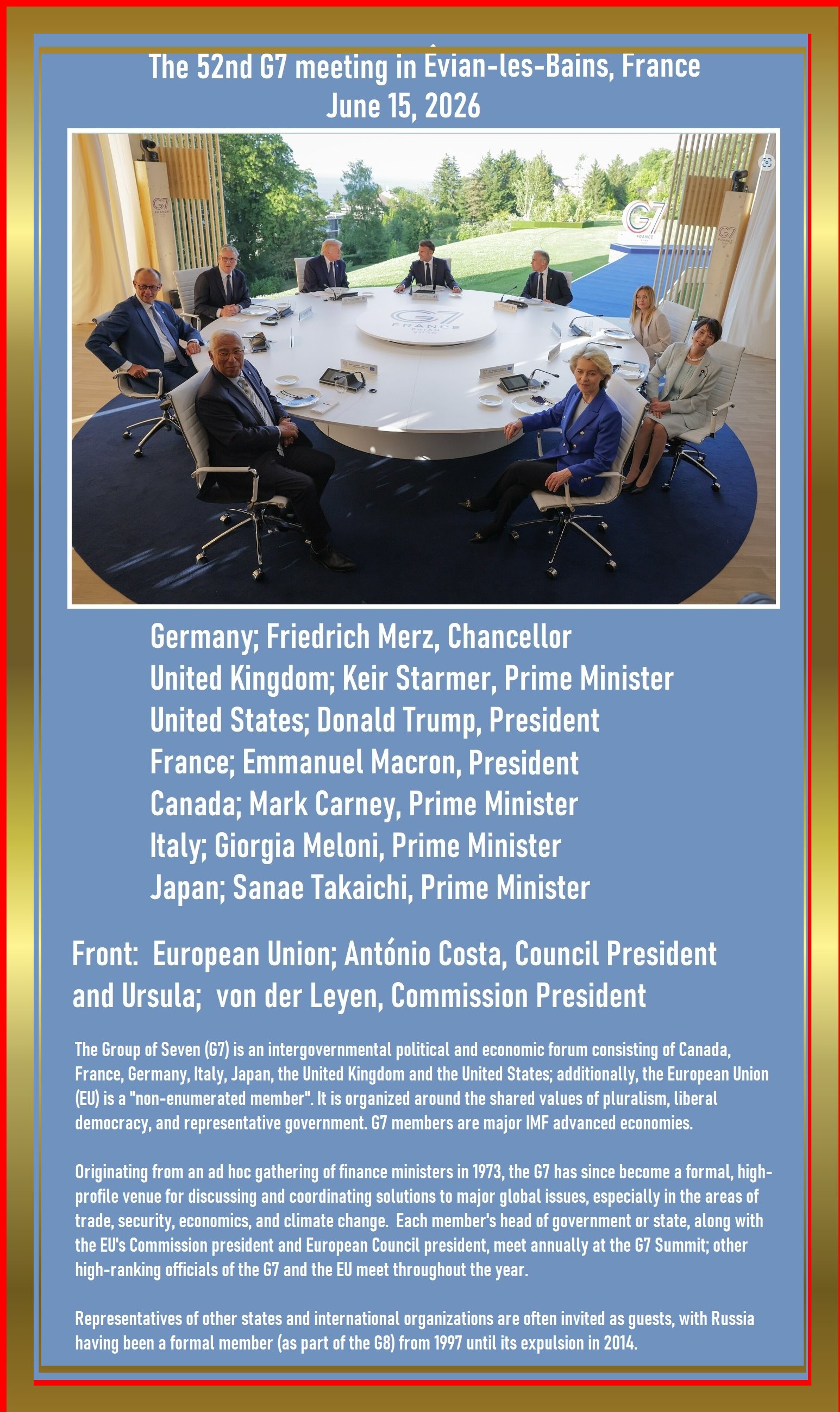
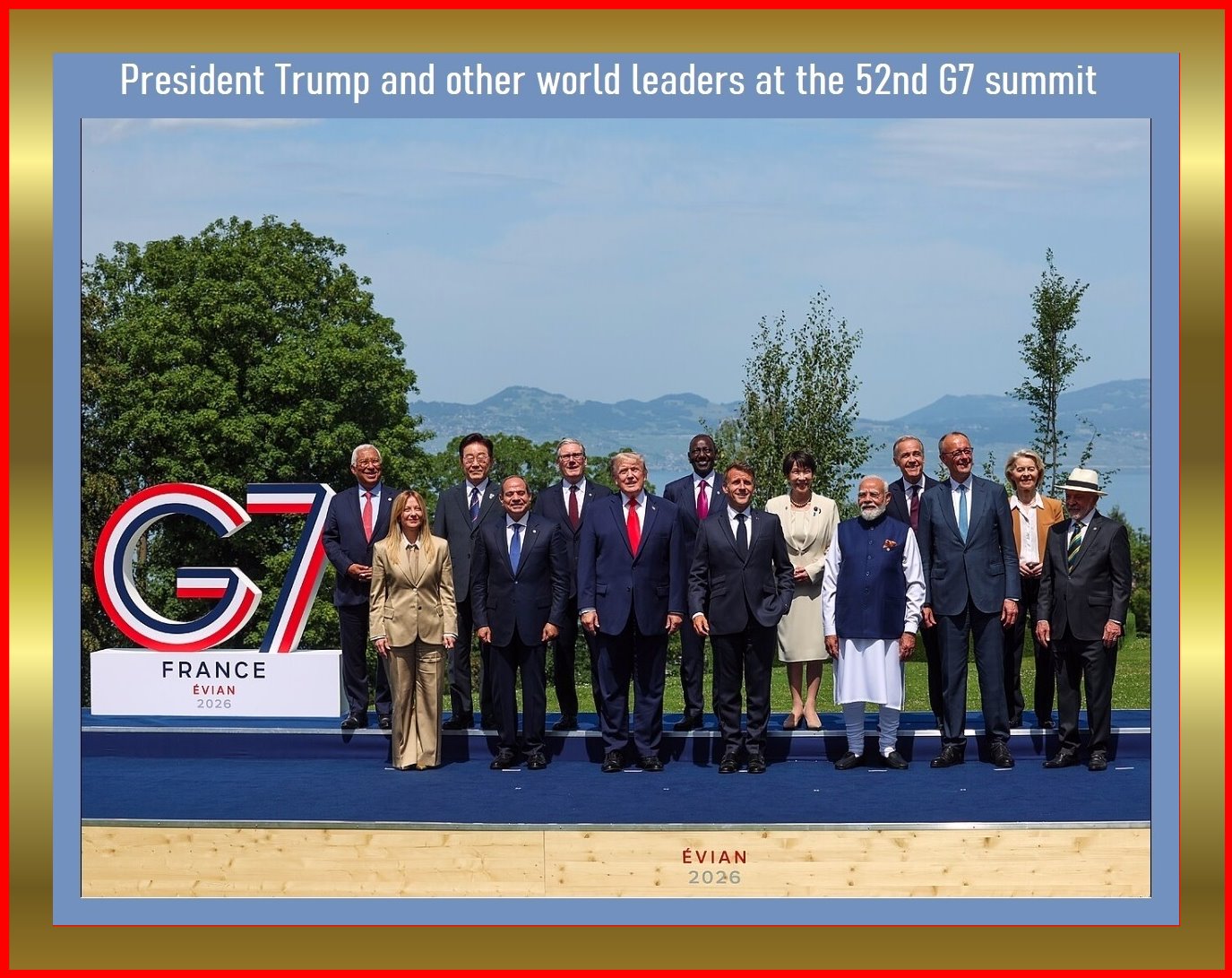
G7
Leaders: “We recognize the breakthrough and the opportunity that currently
exist in the Middle East. We welcome the announcement of a deal between the
United States and Iran, secured under the strong leadership of President Trump,
with the support of mediating countries, which provides an historic opportunity
to prevent Iran from acquiring any nuclear weapon and tackling the threats
related to its regional and ballistic activities. We support and are ready to
contribute to its implementation.”
British
Prime Minister Keir Starmer: “I warmly welcome today’s agreement reached
between the United States and Iran. This is a hugely important step forward in
ending the war, ensuring regional stability and re-opening the Strait of
Hormuz. I congratulate President Trump and the mediators from Pakistan, Qatar
and elsewhere who have contributed to this breakthrough. We have long urged
de-escalation and this is the progress we had hoped to see.”
European
Commission President Ursula von der Leyen: “In Évian, I congratulated
President Trump on his agreement with Iran. We both agree that it should mean a
definitive end to Iran’s nuclear programme. The Strait will reopen. Oil prices
are falling. And that’s how diplomacy delivers.”
French President
Emmanuel Macron: “President Trump signed tonight at Versailles the
agreement between Iran and the United States. This agreement paves the way for
lasting peace and allows the reopening of the Strait of Hormuz. It is an
important step in the right direction for our compatriots that will soon enable
a decrease in energy prices.”
German
Chancellor Friedrich Merz: “The agreement with Iran is an opportunity—for
the stability of the region and for the global economy. The agreed-upon peace
must now hold. We are united on this as @G7.”
Japanese Prime
Minister Sanae Takaichi: “On this occasion, both the United States and Iran
have signed a memorandum, and the cessation of hostilities has been declared.
As our country, we once again warmly welcome the fruition of the diplomatic
efforts by the parties involved and the relevant countries that have played a
mediating role. First and foremost, it is important that free and safe
navigation in the Strait of Hormuz be promptly resumed through the steady
implementation of the memorandum by all parties. Furthermore, we continue to strongly
hope that, through further negotiations between the United States and Iran in
the future, a final agreement on Iran’s nuclear issue and other matters will be
realized as soon as possible. At the G7 Evian Summit in which I participated,
we also engaged in in-depth discussions on the situation in Iran; as our
country, we will continue to closely coordinate with the international
community, while making every diplomatic effort toward the realization of peace
and stability across the entire Middle East region, thereby fulfilling our
role.”
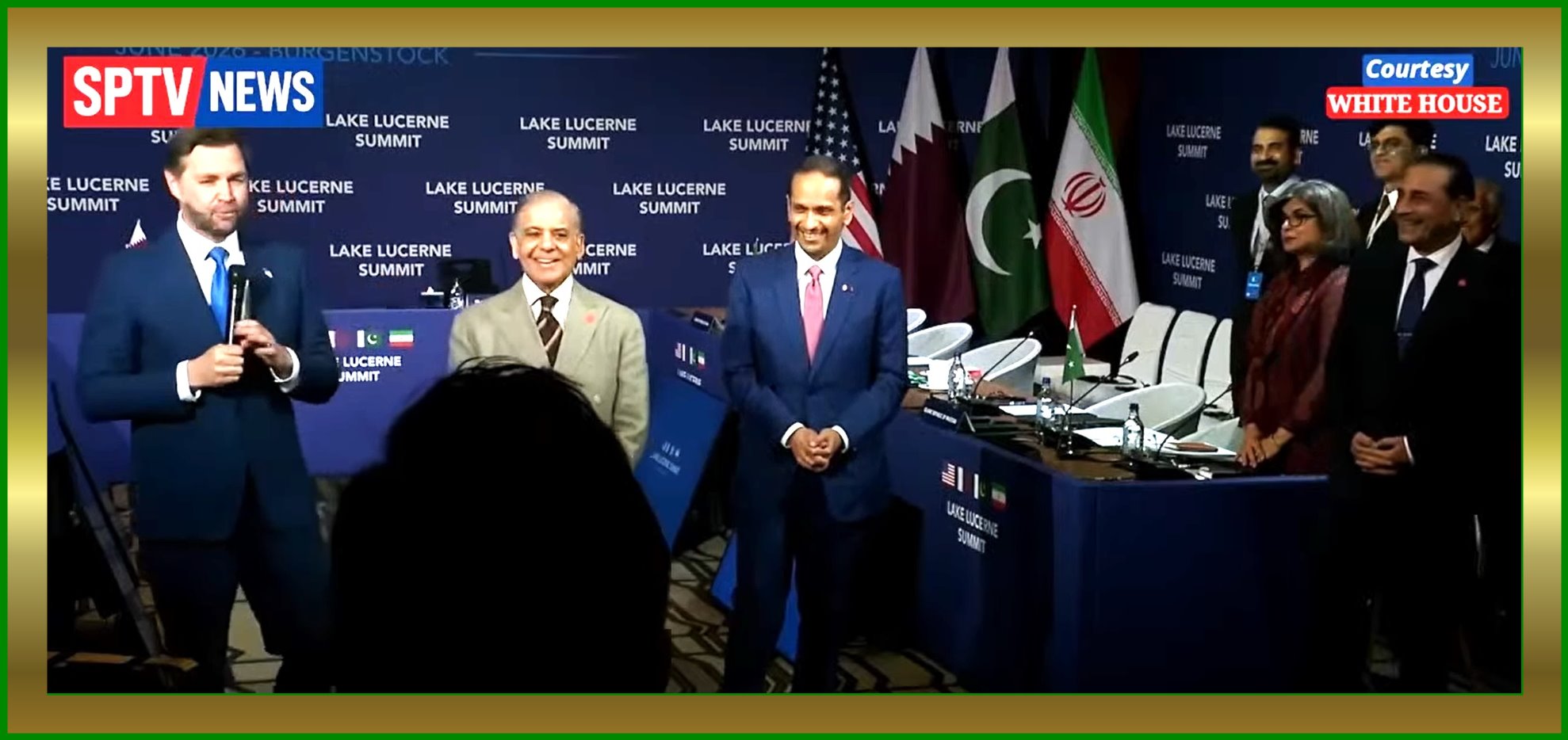
Pakistani Prime
Minister Shehbaz Sharif: “The Memorandum has been signed by honourable
Presidents of both the countries and also endorsed by me as the mediator. The
signing of this agreement at the highest level of the respective governments
demonstrates the commitment of both sides to a diplomatic resolution of the
conflict… I offer my heartfelt congratulations and sincere appreciation to the
President of the United States, Donald J. Trump whose steadfast commitment to
diplomacy and preference for peaceful resolution have once again helped end a
conflict that could have led to devastating consequences for the region and
beyond. I also commend the dedication and tireless efforts of the United States
negotiating team, including J.D. Vance, Steve Witkoff and Jared Kushner, for
their invaluable contributions to this achievement.”
Qatari Ministry of
Foreign Affairs: “The State of Qatar welcomes the electronic signing by the
United States of America and the Islamic Republic of Iran of the Memorandum of
Understanding (MoU) on addressing outstanding issues between them, including
the cessation of military operations and ensuring freedom of navigation in the
Strait of Hormuz. Qatar considers this a renewed affirmation of the two sides’
commitment to resolving their differences through negotiation and peaceful
means as well as to enhancing prospects for sustainable peace and economic
growth at both the regional and international levels.”
Swiss
Federal Department of Foreign Affairs: “Switzerland welcomes the signing of
the Memorandum of Understanding between the United States and Iran yesterday by
both countries. The signing is an important step toward de-escalation in the
region.”
Spokesman for UN
Secretary-General António Guterres: “The Secretary-General welcomes the
announcement that the United States and Iran have agreed on a peace deal that
provides for an immediate and permanent ceasefire, the reopening of the Strait
of Hormuz, as well as a framework for further negotiations. This
represents a critical step towards the peaceful settlement of the conflict.”
Pope Leo XIV:
“I welcome with satisfaction the reaching of an agreement between the Islamic
Republic of Iran and the United States of America, which will be signed on
Friday, as an encouraging result of patient work in dialogue and negotiation. I
express my gratitude to the countries that have worked to facilitate a meeting
between the parties and to make this agreement possible. I hope that the
agreement may help strengthen mutual trust, security, and stability in the
Middle East, promoting paths of dialogue and cooperation among peoples.”
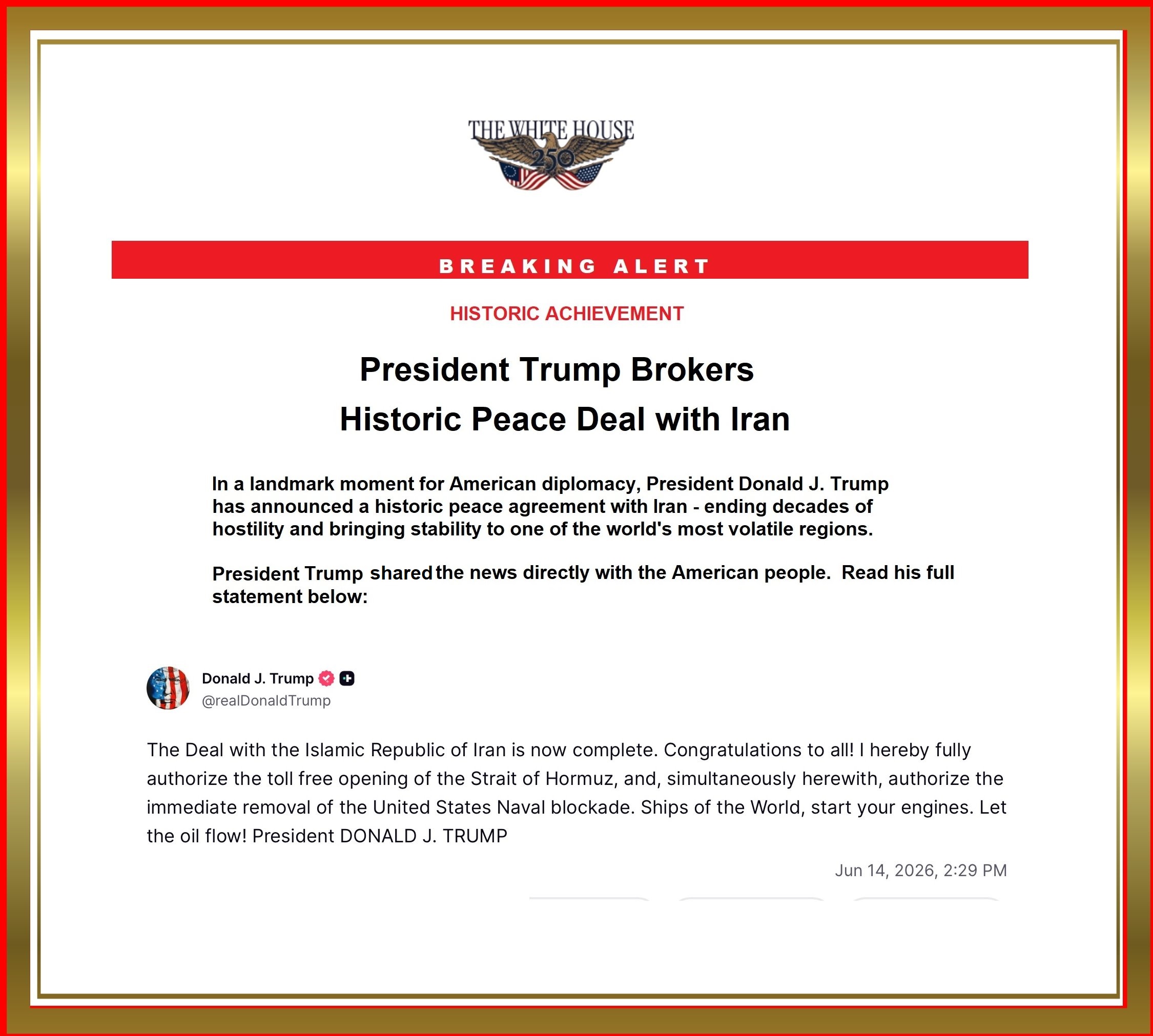
Iran Update Special BREAKING NEWS ALERT Report The Deal with the Islamic Republic of Iran is now complete June 14, 2026
Trump Announces Iran Agreement and Reopening of Strait of Hormuz Al Jazeera English
Vance: We got Iran to BACK OFF striking Israel after Beirut attack
FOX NEWS
US and Iran reach peace deal | BBC News
ISW:
Iran Update Special Report
June 14, 2026
1
The United States and Iran reached an agreement on June 14 that apparently calls for a ceasefire on all fronts, Iran to “open” the Strait of Hormuz, and the United States to lift its naval blockade on Iranian ports. The United States and Iran will sign the agreement in Geneva on June 19.
2
The exact terms of the MoU are not publicly available as of this writing, which makes it difficult to assess how Iran views the agreement in terms of achieving Iranian objectives. Iranian officials have not yet commented on whether Iran would re-open the strait without tolls. It is not clear if a “toll-free” and “open” strait means that Iran retains any of its management functions over the strait. Iran has repeatedly emphasized that the strait is under Iranian control and that the strait is part of Iran’s broader deterrence strategy.
3
An Israeli attack in southern Beirut prompted a flurry of diplomatic efforts to reach an agreement amid Iranian threats that it would respond by attacking Israel. Several Iranian military and security officials warned on June 14 that Iran would respond to the Israeli attack. Three Iranian officials said that Iran called off a planned attack on Israel after Trump urged restraint.
ISW:
Iran Update Special Report
June 12, 2026
1
Persistent internal disagreements remain among Iranian regime leaders over the concessions that the regime should accept in negotiations with the United States. Islamic Revolutionary Guards Corps (IRGC) Commander Major General Ahmad Vahidi and his inner circle appear to continue to seek an agreement that meets Iranian maximalist demands and would be tantamount to a US surrender. Other Iranian officials appear to have disputed a draft memorandum leaked by IRGC-linked and state media.
2
Conflicting US and Iranian accounts of the MoU suggest that the United States and Iran remain far apart on several core issues, however. It remains unclear whether these public statements accurately reflect each side’s negotiating position or the contents of the agreement, given competition between the IRGC and the formal negotiating team.
3
Iranian statements and Iran’s continued use of force and coercion in the Strait of Hormuz indicate that the regime remains unwilling to relinquish its claims to control over the waterway. Any US-Iran agreement must require Iran to abandon efforts to establish long-term authority over the strait. Iranian forces continue to employ coercive measures to force vessels to transit through Iran’s illegal traffic separation scheme and comply with its protection racket.
4
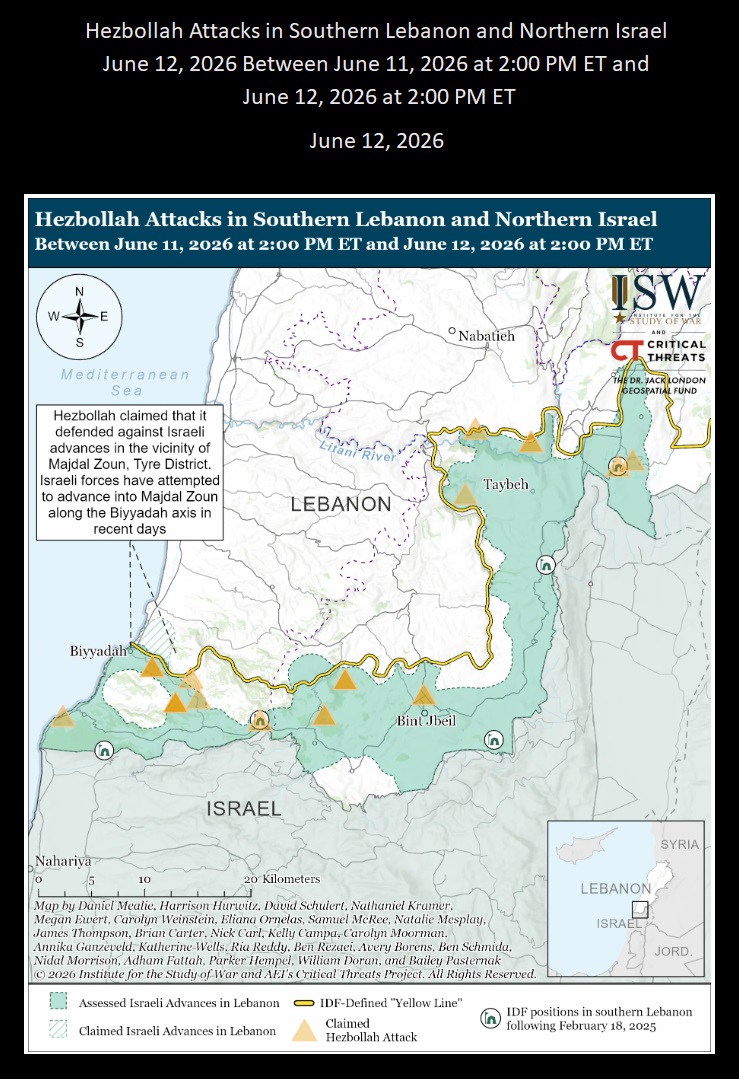
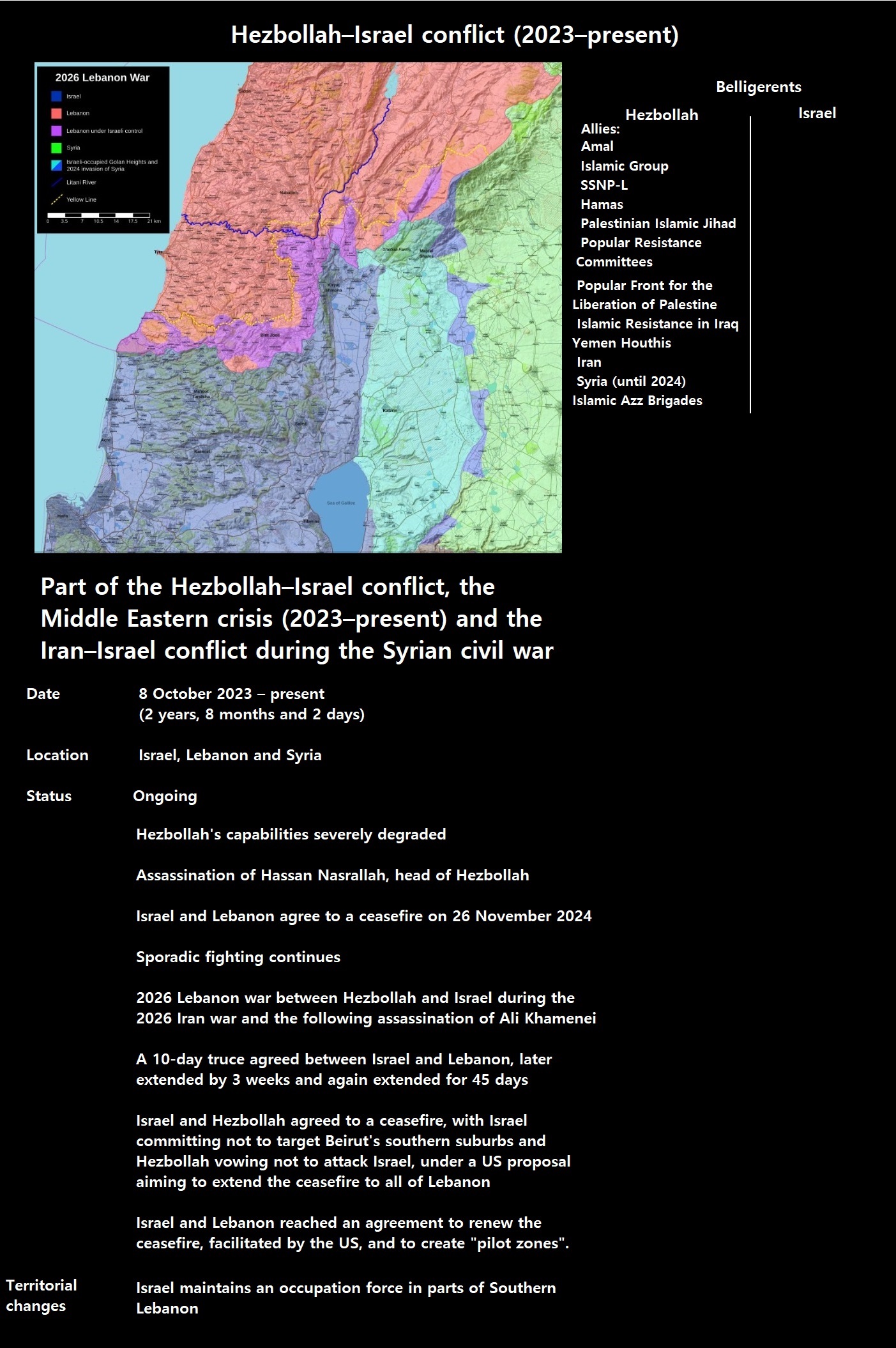
Hezbollah’s efforts to decentralize its military structure may be enabling the group to conduct more effective defenses of specific areas in southern Lebanon than it was able to muster in Fall 2024. The IRGC reportedly reorganized Hezbollah’s C2 system starting in late 2024, and the shift towards unit independence and mobility would theoretically enable Hezbollah fighters to execute more effective defenses against Israeli advances in several sectors across southern Lebanon.
5
“IRGC-linked” figures acting on Iran’s behalf reportedly warned unspecified Iranian-backed Iraqi militia leaders to resist surrendering militia weapons to the Iraqi state in the days after Iraqi Prime Minister Ali al Zaydi’s successful formation of a new government in May 2026. Iran’s reported opposition to Iraqi militia disarmament at this time conflicts with several other reports that Iran has encouraged some Iraqi militias to end their kinetic operations in exchange for solidifying Iranian-backed Iraqi control over the Iraqi state, however.
US-Iran Negotiations and Maritime Activity in the Strait of Hormuz and Persian Gulf June 12, 2026
Persistent internal disagreements remain among Iranian regime leaders over the concessions that the regime should accept in negotiations with the United States. Islamic Revolutionary Guards Corps (IRGC) Commander Major General Ahmad Vahidi and his inner circle, whom ISW-CTP currently assesses are driving regime decision-making, appear to continue to seek an agreement that meets Iranian maximalist demands and would be tantamount to a US surrender. Islamic Development Organization (IDO)-affiliated outlet Mehr News Agency published a version of the draft US-Iran memorandum of understanding (MoU) on June 12 that includes all key Iranian demands, including Iran’s retention of “management” of the Strait of Hormuz, the release of frozen Iranian assets, and a US-funded reconstruction plan for Iran.[1] Multiple Iranian outlets, including IRGC-affiliated outlets and state media, recirculated this report or similar readouts of the draft MoU.[2] That IRGC-affiliated outlets are circulating this maximalist draft of the MOU suggests that this purported draft reflects the views of IRGC leaders. ISW-CTP continues to assess that the IRGC, particularly Vahidi and his inner circle, currently dominates regime decision-making and has repeatedly pushed for uncompromising, maximalist negotiating positions, suggesting that the regime is likely to adopt a similar approach.[3] Some outlets that are not affiliated with the IRGC also circulated this “draft” and expressed hardline and maximalist demands, however.[4]
Other Iranian officials appear to have disputed the MOU leaked by IRGC-linked and state media, which suggests that Iranian officials continue to disagree about which concessions the regime should accept, if any. Iranian Foreign Affairs Minister and lead negotiator Abbas Araghchi called on media outlets on June 12 to avoid publishing speculation about the MoU’s content.[5] US President Donald Trump later reposted Araghchi’s statement on TruthSocial.[6] Araghchi may have issued his statement in response to the circulating “draft“ MOU readouts in Iranian media, Western media reports that are discussing the MoU’s details, or both. Iranian Parliamentarian and Paydari Front member Mahmoud Nabavian published a statement criticizing the details of the deal and described terms of the deal that are notably different from those reported by IRGC- and IDO-affiliated outlets.[7] The Paydari Front is a separate faction that is more hardline than the faction of Vahidi and the IRGC traditionally are. Nabavian stated that the agreement would end the IRGC’s current control over the strait immediately after the agreement is signed and that it does not explicitly address US sanctions on Iran.[8] Iranian state media outlet IRNA’s readout explicitly notes that the agreement does not require Iran to relinquish management over the strait and lifts sanctions on Iranian oil exports.[9] These competing accounts suggest either that the publicly circulated reports do not accurately reflect the current draft under discussion or that multiple drafts are circulating among rival factions within the regime.
The opposing viewpoints in Iran should not be surprising, considering the fractured nature of Iranian leadership and politics at present. Iran is in the middle of a transition period from Supreme Leader Ali Khamenei to his son, Mojtaba. Various power centers are jockeying for power and attempting to influence negotiations. ISW-CTP continues to assess that IRGC commander Major General Ahmad Vahidi’s circle retains the most relative power based on its closeness to Supreme Leader Mojtaba Khamenei.[10] Vahidi, according to reports in April, is serving as an interlocutor between Mojtaba and the government.[11] This suggests Vahidi has assumed a chief of staff-esque position, which is relatively unprecedented for an IRGC commander.
Conflicting reporting about the MOU’s contents and progress likely reflects not only the persistent divisions between the IRGC and the formal Iranian negotiating team but also the way in which both parties are engaging with mediators separately from one another. Araghchi posted on X on June 12 that an agreement has “never been closer.”[12] The Wall Street Journal, citing unspecified mediators, reported that neither Supreme Leader Mojtaba Khamenei nor the IRGC has approved the latest MoU, however.[13] The IRGC in this context presumably refers to Vahidi, who is the IRGC commander. The report added that different mediators are separately engaging the ”diplomatic channel” and the IRGC.[14] That mediators are engaging the formal Iranian negotiating team and IRGC separately is likely indicative of the fissures between the two camps and suggests that the two camps have been unable to reach any internal consensus. The two camps could even be competing to influence the final agreement. US officials told Axios in April that the IRGC effectively told the Iranian negotiating delegation upon their return to Tehran that the negotiating team ”[does not] speak for” the IRGC.[15]
Conflicting US and Iranian accounts of the MoU suggest that the United States and Iran remain far apart on several core issues, however. It remains unclear whether these public statements accurately reflect each side’s negotiating position or the contents of the agreement, given competition between the two camps. A senior Trump administration official told CNN that the agreement includes provisions requiring Iran to dismantle its nuclear program and end support for the Axis of Resistance.[16] A senior US official echoed those Iranian commitments to ABC and added that Iran also agreed to dismantle its nuclear program.[17] Several Iranian media outlets, however, stated on June 12 that neither Iran’s missile program nor its support for the Axis of Resistance is part of the MoU and emphasized that those issues would not be discussed in future negotiations either.[18] These outlets further claimed that the current agreement does not discuss the nuclear issue and imposes no new nuclear commitments on Iran.[19]
Iranian media reporting on the MoU also presents a sequence of events that aims to frontload US concessions and strip the United States of leverage in future nuclear negotiations. Mehr News reported that final negotiations could not begin until Iran receives half of its frozen assets and the United States lifts oil sanctions and its naval blockade.[20] US Vice President JD Vance, in contrast, stated that Iran will receive economic relief only after fulfilling its obligations and that frozen assets will not be released immediately upon signing.[21] These reports, if accurate, reflect deep and serious disagreements over both the sequencing of concessions and the substance of a final agreement.
Iranian statements and Iran’s continued use of force and coercion in the Strait of Hormuz indicate that the regime remains unwilling to relinquish its claims to control over the waterway. Any US-Iran agreement must require Iran to abandon efforts to establish long-term authority over the strait. An unspecified diplomat from a mediating country told Axios that Iran would “reopen” the strait by eliminating tolls and restoring pre-war shipping volumes within 30 days under the MoU.[22] Iranian media reporting describes similar provisions.[23] Iranian state media emphasized that Iran would retain management of the strait under the MoU and that Iran and Oman would jointly determine the future of the strait’s administration, however.[24] The MoU’s terms on re-opening the strait, as rendered by various reports, do not appear to constrain Iran’s broader efforts and capabilities to institutionalize its control over the strait. ISW-CTP previously assessed that Iran’s lack of ability to charge tolls does not constitute a failure of Iran’s broader scheme to control the strait.[25]
Iranian forces continue to employ coercive measures to force vessels to transit through Iran’s illegal traffic separation scheme and comply with its protection racket. Iran fired several drones at commercial vessels attempting to transit the strait on June 11, and US forces reportedly intercepted two Iranian one-way attack drones targeting commercial shipping.[26] An agreement that permits Iran to retain any form of authority over the strait would allow Iran to retain the ability to reimpose restrictions on maritime traffic whenever it chooses, threatening both US interests and global commerce.
ISW:
Iran Update Special Report
June 1, 2026
1. The Iranian regime, which ISW-CTP continues to assess is dominated by Islamic Revolutionary Guards Corps (IRGC) Commander Major General Ahmad Vahidi and his inner circle, suspended US-Iran negotiations on June 1. Vahidi and his inner circle likely calculate that the status quo, in which Iran has neither made concessions to the United States in a diplomatic agreement nor is engaged in a full-scale conflict with the United States, is a favorable situation that advances their objectives. IRGC-affiliated Tasnim News Agency announced on June 1 that the regime has suspended negotiations, ostensibly in response to Israeli operations against Hezbollah in Lebanon.
2. The Iranian regime’s decision to suspend negotiations and emphasize the Lebanon issue is almost certainly a response to US President Donald Trump’s recent amendments to the draft US-Iran memorandum of understanding (MoU).
3. The Iranian regime has likely focused on the Lebanon issue, as opposed to another key sticking point in negotiations, to try to curb Israeli operations against Hezbollah in Lebanon as part of the regime’s broader objective to preserve Hezbollah. The regime also likely seeks to drive a wedge between the United States and Israel by falsely blaming Israel and its operations in Lebanon for the collapse of the US-Iran talks. Vahidi and his inner circle also likely calculate that the status quo will help them advance several other objectives, such as solidifying Iranian control over the Strait of Hormuz and maintaining the Iranian nuclear program.
4. The suspension of negotiations further indicates that Vahidi and his inner circle are driving Iranian decision-making and have likely gained the upper hand over proponents of a deal, particularly Parliament Speaker Mohammad Bagher Ghalibaf.
5. Iran and the United States have exchanged limited fire over the past 48 hours. Islamic Revolutionary Guards Corps (IRGC)-affiliated media announced on May 31 that Iranian air defenses shot down a US MQ-1 Predator drone over “Iranian territorial waters.” US Central Command (CENTCOM) responded by launching defensive strikes against Iranian targets on Qeshm Island and in Goruk, Hormozgan Province. The IRGC retaliated against the US strikes by launching two missiles at US forces in Kuwait on May 31.
6. Iranian forces also likely attacked a civilian cargo vessel located off the coast of Iraq on June 1. United Kingdom Maritime Trade Operations reported on June 1 that an unspecified projectile struck a cargo vessel transiting the northern Persian Gulf approximately 40 nautical miles southeast of the Umm Qasr Port in Iraq.
IMPOSING SANCTIONS ON THE CUBAN REGIME: Today,
President Donald J. Trump signed an Executive Order imposing new sanctions on
the Cuban regime, protecting U.S. national security.
The
Order broadens the existing sanctions on Cuba to include new restrictions
under the International Emergency Economic Powers Act.
The
Order imposes new sanctions on entities, persons, or affiliates that
support the Cuban regime’s security apparatus, are complicit in government
corruption or serious human rights violations, or are agents, officials,
or material supporters of the Cuban government.
The
Order also authorizes new sanctions on covered persons, entities, or
financial institutions that have conducted or facilitated transactions
with persons or entities sanctioned under the Order.
COUNTERING CUBA’S MALIGN INFLUENCE: The
President is addressing the national security threats posed by the communist
Cuban regime by taking decisive action to hold the Cuban regime, and those that
perpetuate it, accountable for its support of hostile actors, terrorism, and
regional instability that endanger American security and foreign policy.
The
Cuban regime aligns itself with countries and malign actors hostile to the
United States, going so far as to facilitate their military and
intelligence operations. For example, Cuba hosts foreign adversary
facilities focused on targeting and exploiting sensitive national security
information from the United States.
Cuba
maintains close ties to other major state sponsors of terrorism, including
the Government of Iran, and provides safe haven for transnational
terrorist groups, including Hezbollah.
The
regime persecutes and tortures political opponents, denies its citizens
free speech rights, and actively spreads communist ideology across the
region while repressing its populace.
Cuba’s
corrupt regime continues to drive migration towards the United States,
with more than 850,000 migrants arriving in America between 2022 and the
fall of 2024.
Cuba
provides a permissive environment for hostile foreign intelligence,
military, and terrorist operations less than 100 miles from the American
homeland.
These
actions constitute an unusual and extraordinary threat to U.S. national
security and foreign policy, requiring immediate response to protect
American citizens and interests.
PUTTING AMERICA FIRST: President
Trump has consistently confronted regimes that threaten U.S. security and
interests, delivering where others have failed to hold adversaries accountable.
President
Trump is continuing efforts from his first term to stand with the Cuban
people and hold the regime accountable.
In
his first term, President Trump implemented a robust policy toward Cuba,
reversing the Obama Administration’s one-sided deal that eased
restrictions without securing meaningful reforms for the Cuban people.
Relying on decades of evidence, President Trump’s first Administration
properly designated Cuba as a State Sponsor of Terrorism.
In
June 2025, President Trump strengthened the United States’ policy pressure
on Cuba through a National Secuirty Presidential Memorandum, ensuring that
engagement between the United States and Cuba advances the interests of
the United States and the Cuban people, including promoting human rights,
fostering a private sector independent of government control, and
enhancing national security.
In
January 2026, President Trump signed an Executive Order declaring a
national emergency and establishing a process to impose tariffs on goods
from countries that sell or otherwise provide oil to Cuba, protecting U.S.
national security and foreign policy from the Cuban regime’s malign
actions and policies.
President
Trump continues to demonstrate his commitment to directly addressing
national security threats from abroad.
Operation
Absolute Resolve captured Venezuelan dictator and indicted narcoterrorist
Nicolas Maduro and his wife to face American justice.
Operation
Southern Spear eliminated 186 narcoterrorists in strikes against
fentanyl-trafficking vessels, stemming the deadly flow of drugs into
America.
In
Operation Midnight Hammer, President Trump decisively eliminated Iran’s
nuclear weapons capability via targeted military strikes, escalated
sanctions, and intelligence operations.
Operation
Epic Fury successfully completed all of its military objectives in less
than six weeks. Iran no longer poses the nuclear and terror threat it
did, and no longer has the nuclear ambitions it held before. Now, the
U.S. naval blockade and Operation Economic Fury have dissipated Iran’s
economy.
By the authority vested in me
as President by the Constitution and the laws of the United States of America,
including the International Emergency Economic Powers Act (50 U.S.C.
1701 et seq.) (IEEPA), the National Emergencies Act (50 U.S.C.
1601 et seq.) (NEA), and section 301 of title 3, United States
Code, I hereby determine and order:
Section1.
National Emergency. As President of the United States,
I have an imperative duty to protect the national security and foreign policy
of this country. I find that the policies, practices, and actions of the
Government of Cuba constitute an unusual and extraordinary threat, which has
its source in whole or substantial part outside the United States, to the
national security and foreign policy of the United States.
The Government of Cuba has
taken extraordinary actions that harm and threaten the United States. The
regime aligns itself with — and provides support for — numerous hostile
countries, transnational terrorist groups, and malign actors adverse to the United
States, including the Government of the Russian Federation (Russia), the
People’s Republic of China (PRC), the Government of Iran, Hamas, and Hezbollah.
For example, Cuba blatantly hosts dangerous adversaries of the United
States, inviting them to base sophisticated military and intelligence
capabilities in Cuba that directly threaten the national security of the United
States. Cuba hosts Russia’s largest overseas signals intelligence
facility, which tries to steal sensitive national security information of the
United States. Cuba continues to build deep intelligence and defense
cooperation with the PRC. Cuba welcomes transnational terrorist groups,
such as Hezbollah and Hamas, creating a safe environment for these malign
groups so that these transnational terrorist groups can build economic,
cultural, and security ties throughout the region and attempt to destabilize
the Western Hemisphere, including the United States. Cuba has long
provided defense, intelligence, and security assistance to adversaries in the
Western Hemisphere, attempting to thwart United States and international
sanctions designed to enforce the stability of the region, uphold the rule of
law, and safeguard the national security and foreign policy of the United
States. Cuba continues to try to thwart United States efforts to address
threats to the United States posed by hostile countries, transnational
terrorist groups, and malign actors, including in the Western Hemisphere.
Further, contrary to the
interests and foreign policy of the United States, the Cuban communist regime
supports terrorism and destabilizes the region through migration and violence.
The communist regime persecutes and tortures its political opponents;
denies the Cuban people free speech and press; corruptly profits from their
misery; and commits other human-rights violations. For example, families
of political prisoners face retaliation for peacefully protesting the improper
confinement of their loved ones. Cuban authorities harass worshippers,
block free association by civil society organizations, prohibit free press, and
deny the ability to speak freely, including on the internet. The Cuban
regime continues to spread its communist ideas, policies, and practices around
the Western Hemisphere, threatening the foreign policy of the United States.
The United States has zero
tolerance for the depredations of the communist Cuban regime. The United
States will act to protect the foreign policy, national security, and national
interests of the United States, including by holding the Cuban regime
accountable for its malign actions and relationships, while also remaining
committed to supporting the Cuban people’s aspirations for a free and
democratic society.
I find that the policies,
practices, and actions of the Government of Cuba directly threaten the safety,
national security, and foreign policy of the United States. The policies,
practices, and actions of the Government of Cuba are designed to harm the
United States and support hostile countries, transnational terrorist groups,
and malign actors that seek to destroy the United States. The policies,
practices, and actions of the Government of Cuba are also repugnant to the
moral and political values of democratic and free societies and conflict with
the foreign policy of the United States to encourage peaceful change in Cuba
and to promote democracy, the principle of free expression and press, the rule
of law, and respect for human rights throughout the world.
NOW, THEREFORE, I, DONALD J.
TRUMP, President of the United States of America, find that the situation
with respect to Cuba constitutes an unusual and extraordinary threat, which has
its source in whole or substantial part outside the United States, to the
national security and foreign policy of the United States and hereby declare a
national emergency with respect to that threat.
To deal with the national
emergency declared in this order, I determine that it is necessary and
appropriate to establish a tariff system, as described below. Under
this system, an additional ad valorem duty may be imposed on
imports of goods that are products of a foreign country that directly or
indirectly sells or otherwise provides any oil to Cuba. In my judgment,
the tariff system, as described below, is necessary and appropriate to address
the national emergency declared in this order.
Sec. 2. Imposition
of Tariffs. (a) Beginning on the effective date of this order,
an additional ad valorem rate of duty may be imposed on goods
imported into the United States that are products of any other country that
directly or indirectly sells or otherwise provides any oil to Cuba, in
accordance with subsections (b) and (c) of this section.
(b)(i) The Secretary of
Commerce, in consultation with the Secretary of State and any senior official
the Secretary of Commerce deems appropriate, shall determine whether, after the
effective date of this order, a foreign country directly or indirectly sells or
otherwise provides any oil to Cuba. After the Secretary of Commerce finds
that a foreign country directly or indirectly sells or otherwise provides any
oil to Cuba, the Secretary of Commerce shall inform the Secretary of State of
his finding, including any information relevant to that finding.
(ii) The Secretary of
Commerce may issue rules, regulations, and guidance necessary or appropriate to
implement this order. The Secretary of Commerce may also make any other
determinations or take any other actions necessary or appropriate to implement
this order.
(c)(i) After the
Secretary of Commerce makes an affirmative finding pursuant to subsection
(b)(i) of this section and informs the Secretary of State of his finding, the
Secretary of State, in consultation with the Secretary of the Treasury, the Secretary
of Commerce, the Secretary of Homeland Security, and the United States Trade
Representative, shall determine whether and to what extent an additional ad
valorem rate of duty should be imposed on goods that are products of
the foreign country found to directly or indirectly sell or otherwise provide
any oil to Cuba.
(ii) If the
Secretary of State determines that an additional ad valorem rate
of duty should be imposed on goods that are products of the country found to
directly or indirectly sell or otherwise provide any oil to Cuba, the Secretary
of State shall inform me of his recommendation, and the Secretary of Commerce
shall inform me of his finding related to that recommendation. I will
then consider the recommendation and finding, among other relevant things, in
determining whether and to what extent to impose an additional ad
valorem rate of duty on goods that are products of the country in
question.
(iii) The Secretary of
State may issue rules, regulations, and guidance necessary or appropriate to
implement this order. The Secretary of State may also make any other
determinations or take any other actions necessary or appropriate to implement
this order.
Sec. 3. Modification
Authority. (a) To ensure that the national emergency declared
in this order is dealt with, I may modify this order, including in light of
additional information, recommendations from senior officials, or changed
circumstances.
(b) Should a foreign
country retaliate against the United States in response to this order or any
action taken pursuant to this order, I may modify this order or actions taken
pursuant to this order to ensure the efficacy of this order and the actions
taken pursuant to this order to deal with the national emergency declared in
this order.
(c) Should the
Government of Cuba or another foreign country affected by this order take
significant steps to address the national emergency declared in this order and
align sufficiently with the United States on national security and foreign
policy matters, I may modify this order.
Sec. 4. Monitoring
and Recommendations. (a) The Secretary of State, in
consultation with any senior official the Secretary of State deems
appropriate, shall monitor the circumstances involving the national emergency
declared in this order. The Secretary of State shall inform me of
any circumstance that, in his opinion, might indicate the need for further
Presidential action to deal with the national emergency declared in this order.
(b) The Secretary of
State, in consultation with the Secretary of the Treasury, the Secretary of
Commerce, the Secretary of Homeland Security, the United States Trade
Representative, and any other senior official the Secretary of State deems
appropriate, shall recommend to me additional action, if necessary, if the
actions in this order or taken pursuant to this order are not effective in
dealing with the national emergency declared in this order.
(c) The Secretary of
Commerce shall monitor whether a foreign country directly or indirectly
sells or otherwise provides any oil to Cuba. The Secretary of Commerce
shall continue such monitoring after a foreign country has been found to
do so.
Sec. 5. Delegation.
Consistent with applicable law, the Secretary of State and the Secretary of
Commerce are directed and authorized to take all actions necessary to implement
and effectuate this order — including through temporary suspension or amendment
of regulations or through notices in the Federal Register and
by adopting rules, regulations, or guidance — and to employ all powers granted
to the President, including by IEEPA, as may be necessary to implement this
order. The head of each executive department and agency (agency) is
authorized to and shall take all appropriate measures within the agency’s
authority to implement this order. The head of each agency may,
consistent with applicable law, including section 301 of title 3, United States
Code, redelegate the authority to take such appropriate measures within the
agency.
Sec. 6.
Reporting Directives. The Secretary of State, in
consultation with any senior official he deems appropriate, is hereby
authorized and directed to submit recurring and final reports to the Congress
on the national emergency declared in, and authorities exercised by, this
order, consistent with section 401 of the NEA (50 U.S.C. 1641) and section
204(c) of IEEPA (50 U.S.C. 1703(c)).
Sec. 7.
Definitions. For the purposes of this order:
(a) The term “oil” means
crude oil or petroleum products.
(b) The term
“indirectly” includes selling to or otherwise providing oil to Cuba through
intermediaries or third countries, with knowledge that such oil may be provided
to Cuba, as determined by the Secretary of Commerce.
(c) The term “Cuba”
means the territory of Cuba and any other territory or marine area, including
the exclusive economic zone and continental shelf, over which the Government of
Cuba claims sovereignty, sovereign rights, or jurisdiction, provided that the
Government of Cuba exercises partial or total de facto control over the area or
derives a benefit from economic activity in the area pursuant to international
arrangements.
(d) The term “Government
of Cuba” includes the Government of Cuba, any political subdivision, agency, or
instrumentality thereof, and any person owned or controlled by, or acting for
or on behalf of, the Government of Cuba.
Sec. 8.
Effective Date. This order is effective at 12:01 a.m.
eastern standard time on January 30, 2026.
Sec. 9. Interaction
With Other Presidential Actions. Any provision of previous
proclamations and Executive Orders that is inconsistent with the actions
directed in this order is superseded to the extent of such inconsistency.
Sec. 10.
Severability. If any provision of this order or the
application of any provision of this order to any individual or circumstance is
held to be invalid, the remainder of this order and the application of its
provisions to any other individuals or circumstances shall not be
affected. If the action in this order or any action taken pursuant to
this order is held invalid, the other actions imposed to deal with the national
emergencies declared with respect to the Government of Cuba shall not be
affected and shall remain in effect.
Sec. 11.
General Provisions. (a) Nothing in this order shall be
construed to impair or otherwise affect:
(i) the authority
granted by law to an executive department or agency, or the head thereof; or
(ii) the functions of
the Director of the Office of Management and Budget relating to budgetary,
administrative, or legislative proposals.
(b) This order shall be
implemented consistent with applicable law and subject to the availability of
appropriations.
(c) This order is not
intended to, and does not, create any right or benefit, substantive or
procedural, enforceable at law or in equity by any party against the United
States, its departments, agencies, or entities, its officers, employees, or agents,
or any other person.
(d) The costs for
publication of this order shall be borne by the Department of State.
CONFRONTING THE CUBAN REGIME: Today, President Donald J. Trump signed an Executive Order declaring a national emergency and establishing a process to impose tariffs on goods from countries that sell or otherwise provide oil to Cuba, protecting U.S. national security and foreign policy from the Cuban regime’s malign actions and policies.
• The Order imposes a new tariff system that allows the United States to impose additional tariffs on imports from any country that directly or indirectly provides oil to Cuba.
• The Order authorizes the Secretary of State and Secretary of Commerce to take all necessary actions, including issuing rules and guidance, to implement the tariff system and related measures
• The President may modify the Order if Cuba or affected countries take significant steps to address the threat or align with U.S. national security and foreign policy objectives.
COUNTERING CUBA’S MALIGN INFLUENCE: The President is addressing the depredations of the communist Cuban regime by taking decisive action to hold the Cuban regime accountable for its support of hostile actors, terrorism, and regional instability that endanger American security and foreign policy.
• The Cuban regime aligns itself with numerous hostile countries and malign actors, hosting their military and intelligence capabilities. For example, Cuba hosts Russia’s largest overseas signals intelligence facility focused on stealing sensitive national security information from the United States.
• Cuba provides safe haven for transnational terrorist groups, such as Hezbollah and Hamas, and supports adversaries in the Western Hemisphere, undermining U.S. sanctions and regional stability.
• The regime persecutes and tortures political opponents, denies free speech and press, profits corruptly from the Cuban people’s misery, and incites chaos by spreading communist ideology across the region.
• These actions constitute an unusual and extraordinary threat to U.S. national security and foreign policy, requiring immediate response to protect American citizens and interests.
PUTTING AMERICA FIRST: President Trump has consistently confronted regimes that threaten U.S. security and interests, delivering where others have failed to hold adversaries accountable.
• President Trump is continuing efforts from his first term to stand with the Cuban people and hold the regime accountable.
o In his first term, President Trump implemented a robust policy toward Cuba, reversing the Obama Administration’s one-sided deal that eased restrictions without securing meaningful reforms for the Cuban people.
• In June 2025, President Trump implemented partial travel restrictions on nationals from Cuba due to its role as a state sponsor of terrorism, its failure to cooperate or share sufficient law enforcement information with the United States, its historical refusal to accept back its removable nationals, and its high visa overstay rate.
• In June 2025, President Trump signed a National Security Presidential Memorandum (NSPM) to strengthen the policy of the United States toward Cuba.
• This is not the first time President Trump has taken a tough stance against hostile regimes—in just the past few months, he has ordered strikes on Iran’s nuclear infrastructure and authorized operations to remove Venezuela’s Nicolas Maduro from power, making clear that dictators and state sponsors of terrorism will be held to account.
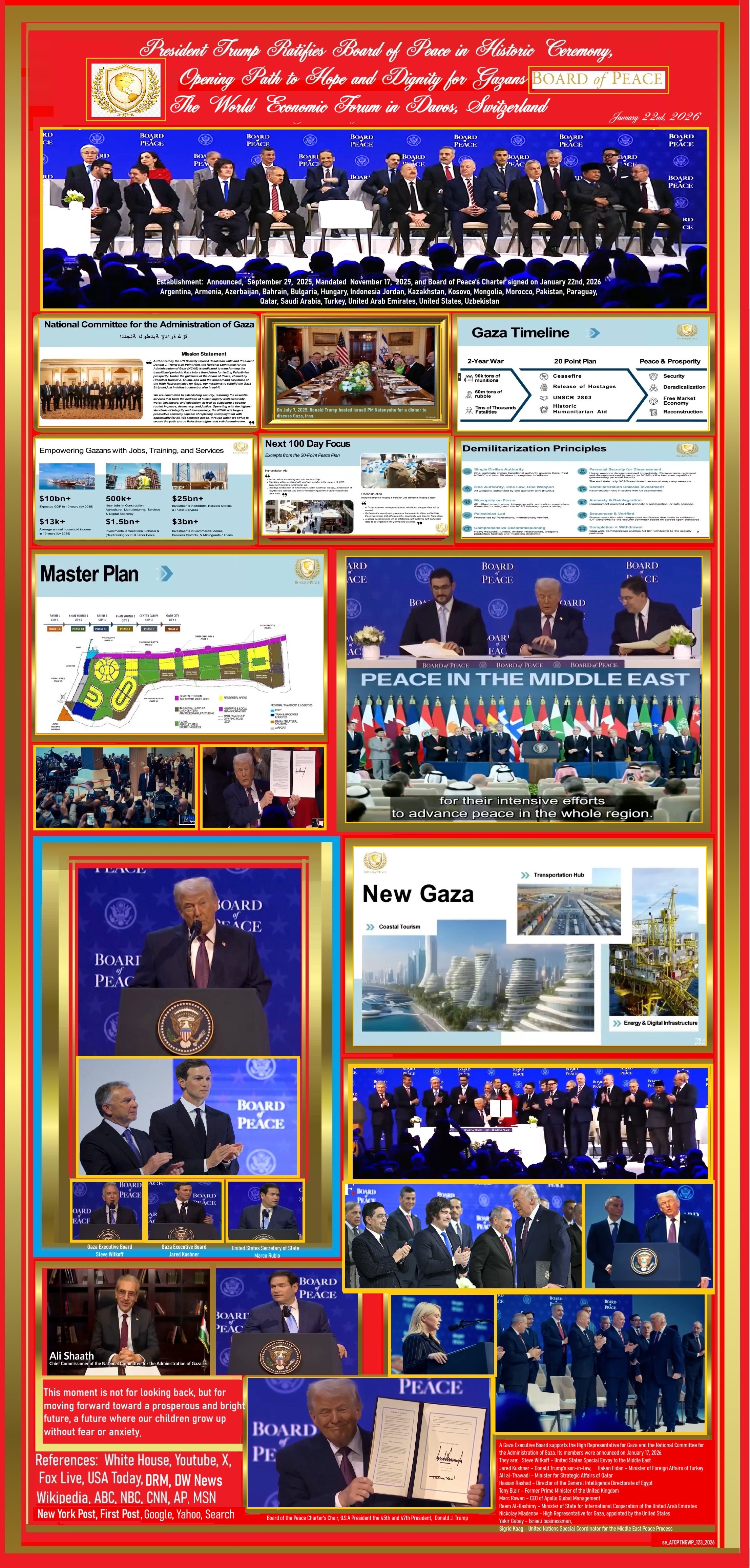
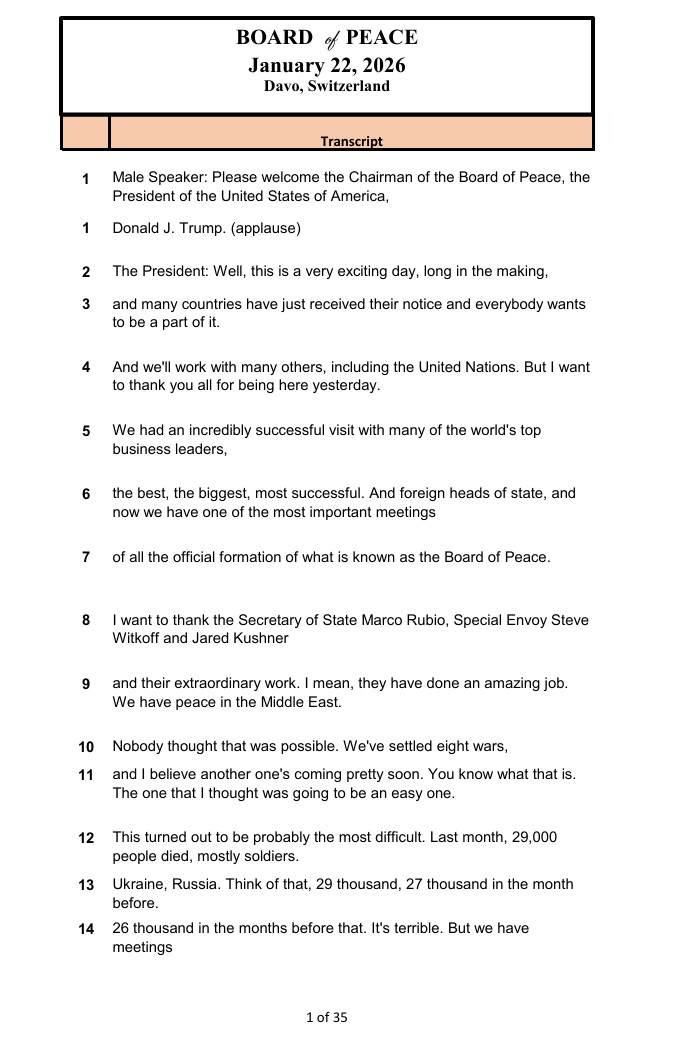
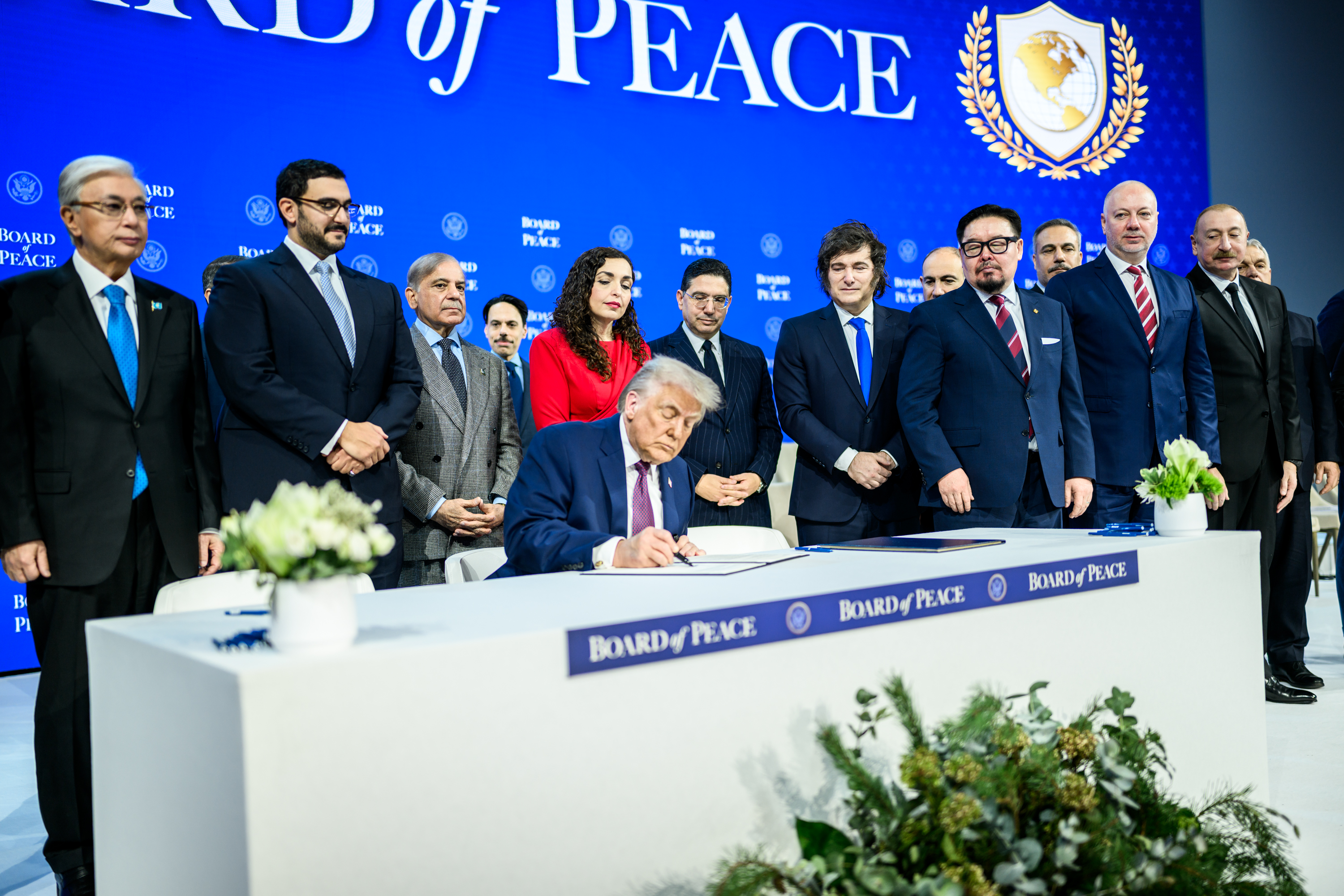
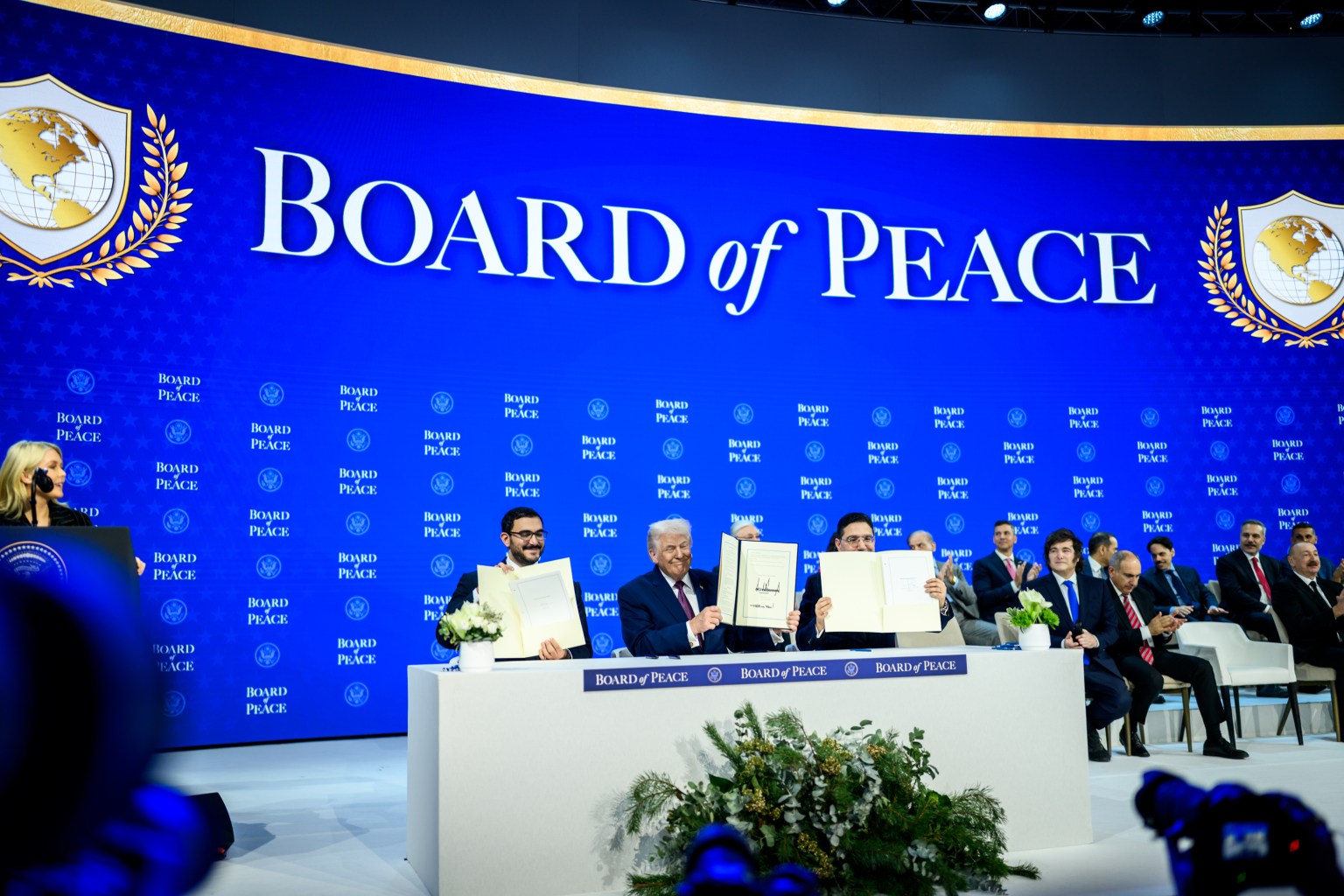
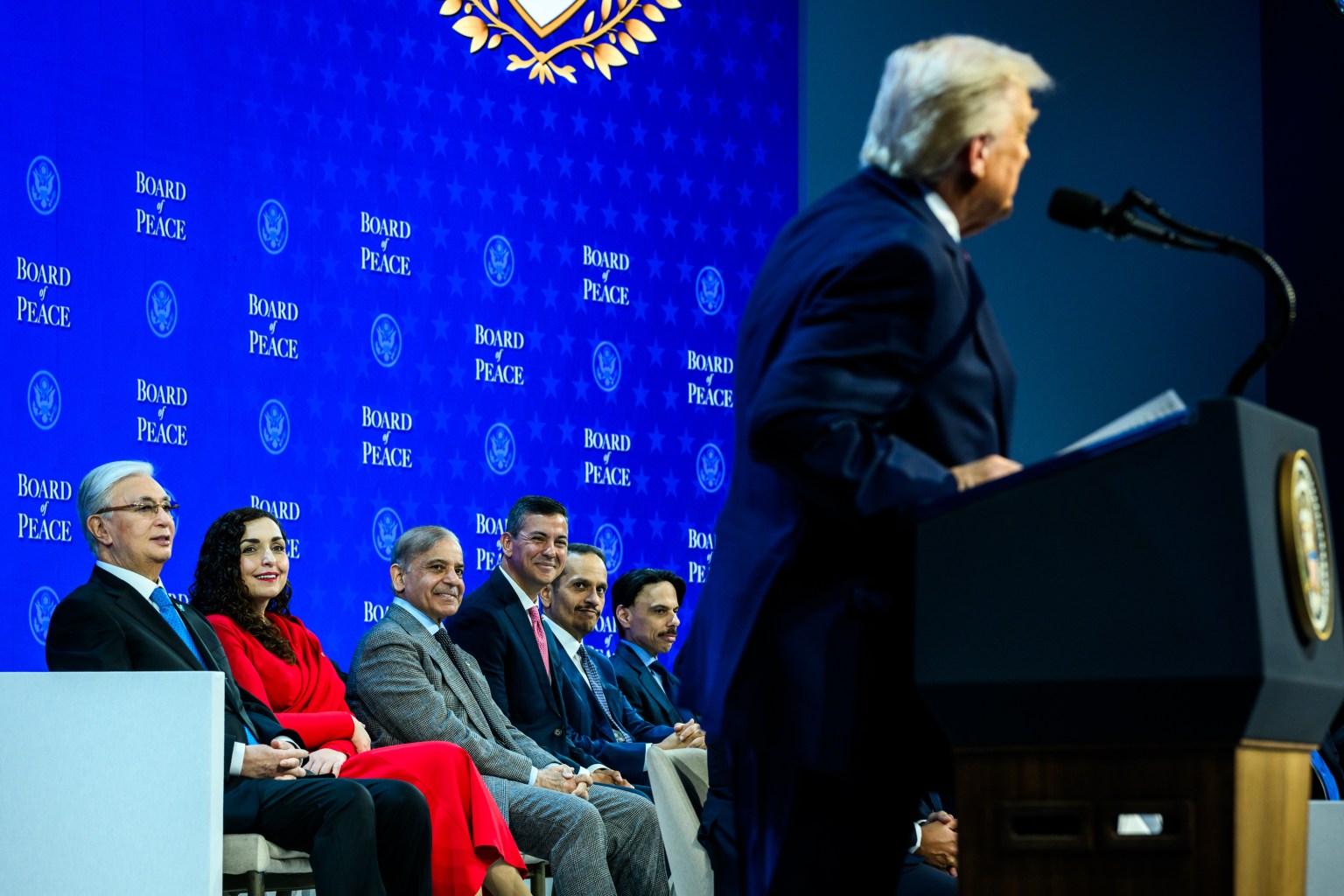
Today, in an historic ceremony
in Davos, Switzerland, President Donald J. Trump formally ratified the Charter
of the Board of Peace — establishing it as an official international
organization. President Trump, who is serving as the Board’s
Chairman, was joined by Founding Members representing countries around the
world who have committed to building a secure and prosperous future for Gaza
that delivers lasting peace, stability, and opportunity for its people.
It’s another pivotal step
forward in realizing President Trump’s vision of
transforming Gaza from a region plagued by conflict and despair into one
defined by opportunity, hope, and vitality. The
Board of Peace stands ready to mobilize global resources, enforce
accountability, and guide the implementation of the next critical phases of
demilitarization, governance reform, and large-scale rebuilding.
President
Trump: “This Board has
the chance to be one of the most consequential bodies ever created, and
It’s my enormous honor to serve as its Chairman… Today, the first steps
toward a brighter day for the Middle East and a much safer future for the
world are unfolding right before your very eyes. Together, we are in a
position to have any credible chance… to end decades of suffering, stop
generations of hatred and bloodshed, and forge a beautiful, everlasting,
and glorious peace for that region.”
Secretary
of State Marco Rubio: “We
are here today because of President Trump’s vision. If we go back just a
few months ago, people thought what was happening in Gaza was impossible
to solve… No one thought that that would ever come to a resolution without
more fighting and more bloodshed along the way… But President Trump had
the vision and the courage to dream the impossible, to believe that it was
doable, and to pursue it with all of his heart.”
High
Representative for Gaza Nickolay Mladenov: “Who
would’ve thought two years ago that we would be sitting here with this
group of countries, with this leadership, giving the people of Gaza a new
chance?… For too long, Gazans, Palestinians, and Israelis have lived with
conflict, with death, with destruction. Now, the page turns.”
Special
Envoy for Peace Missions Steve Witkoff: “We
have achieved a peace deal in Gaza. We have brought the hostages home… And
maybe most importantly, we have created a sense of hope for what the
future can bring in Gaza and all other places where the Board of Peace
will operate. And I am so honored, Mr. President, to have worked on this
on your behalf.”
Jared
Kushner: “85% of the GDP of
Gaza has been aid for a long time. That’s not sustainable. It doesn’t give
these people dignity; it doesn’t give them hope. And so we want to use
free market economy principles — a lot of what President Trump spoke about
that he’s doing in America — we want to bring the same mindset, the same
approach, to a place like Gaza to give these people the ability to thrive
and have a good life… If we believe that peace is possible then peace
really can be possible.”
White House,wikipedia, Youtube, Fox Live, USA Tpoday, DRM, DW News, ABC, NBC, CNN, AP, MSN, New York Post, First Post Google, Yahoo, and Search, ISW,, Al Jazeera English, Fox News, BBC, Truth Social, SPTV, TBN Israel, ILTV, USNI, Fox News, France News, G7, NATO, Department of WAR, AL Zazeera, CNBC, CBS, AP, Reuters, Youtube, Google, Yahoo, MSN, MBC
January 22nd 2026 - Rev. January 24, 2026, June 12, 2026, June 14, 2026
Catch4all.com
is proud to provide positive websites for the communities and for
the positive viewers from all over the world.....
)
)
)
)
)
)
)
)
)
)
)
)
)
)
)
)
)
)
)
)
)
)
)
)
)
)
)
)
)
)
)
)
)
)
)
)
)
)
)
)
)
)
)
)
)
)
)
)
)
)
)
)
)
)
)
)
)
)
)
)
)
)
)
)
)
)
)
)
)
)
)
)
)
)
)
)
)
)
)
)
)
)
)
)
)
)
)
)
)
)
)
)
)
)
)
)
)
)
)
)
)
)
)
)
)
)
)
)
)
)
)
)
)
)
)
)
)
)
)
)
)
)
)
)
)
)
)
)
)
)
)
)
)
)
)
)
)
)
)
)
)
)
)
)
)
)
)
)
)
)
)
)
)
)
)
)
)
)
)
)
)
)
)
)
)
)
)
)
)
)
)
)
)
)
)
)
)
)
)
)
)
)
)
)
)
)
)
)
)
)
)
)
)
)
)
)
)

)
)
)
)
)
)
)
)
)
)
)
)
)
)
)
)
)
)
)
)
)
)
)
)
)
)
)
)
)
)
)
)
)
)
)
)
)
)
)
)
)
)
)
)
)
)
)
)
)
)
)
)
)
)
)
)
)
)
)
)
)
)
)
)
)
)
)
)
)
)
)
)
)
)
)
)
)
)
)
)
)
)
)
)
)
)
)
)
)
)
)
)
)
)
)
)
)
)
)
)
)
)
)
)
)
)
)
)
)
)
)
)
)
)
)
)
)
)
)
)
)
)
)
)
)
)
)
)
)
)
)
)
)
)
)
)
)
)
)
)
)
)
)
)
)
)
)
)
)
)
)
)
)
)
)
)
)
)
)
)
)
)
)
)
)
)
)
)
)
)
)
)
)
)
)
)
)
)
)
)
)
)
)
)
)
)
)
)
)
)
)
)
)
)
)
)
)
)
)
)
)
)
)
)
)
)
)
)
)
)
)
)
)
)
)
)
)
)
)
)
)
)
)
)
)
)
)
)
)
)
)
)
)
)
)
)
)
)
)
)
)
)
)
)
)
)
)
)
)
)
)
)
)
)
)
)
)
)
)
)
)
)
)
)
)
)
)
)
)
)
)
)
)
)
)
)
)
)
)
)
)
)
)
)
)
)
)
)
)
)
)
)
)
)
)
)
)
)
)
)
)
)
)
)
)
)
)
)
)
)
)
)
)
)
)
)
)
)
)
)
)
)
)
)
)
)
)
)
)
)
)
)
)
)
)
)
)
)
)
)
)
)
)
)
)
)
)
)
)
)
)
)
)
)
)
)
)
)
)
)
)
)
)
)
)
)
)
)
)
)
)
)
)
)
)
)
)
)
)
)
)
)
)
)
)
)
)
)
)
)
)
)
)
)
)
)
)
)
)
)
)
)
)
)
)
)
)
)
)
)
)
)
)
)
)
)
)
)
)
)
)
)
)
)
)
)
)
)
)
)
)
)
)
)
)
)
)
)
)
)
)
)
)
)
)
)
)
)
)
)
)
)
)
)
)
)
)
)
)
)
)
)
)
)
)
)
)
)
)
)
)
)
)
)
)
)
)
)
)
)
)
)
)
)
)
)
)
)
)
)
)
)
)
)
)
)
)
)
)
)
)
)
)
)
)
)
)
)
)