|
US, S. Korea fire missiles to sea, matching North’s launches
N. Korea launches 8 short-range ballistic missiles on Sunday
According to Arirang News, North Korea this morning launched eight short-range ballistic missiles toward the East Sea -- the most it's launched at one time so far this year. They were launched, according to South Korea, successively from 9:08 this morning until 9:43. Shin Ye-eun has the details. North Korea on Sunday fired eight short-range ballistic missiles towards the East Sea. According to South Korea's Joint Chiefs of Staff, at least some of the missiles were fired from the Sunan District of Pyeongyang, where the regime has its main airfield. The South Korean military is currently analyzing the missiles' trajectory.
Sunday's launch came just a day after South Korea and the U.S. wrapped up a three-day joint naval exercise in waters off Okinawa... in a demonstration of the strength of their alliance and their joint defense capabilities.
Other missile tests by the North this year have also come after allied military drills or talks. Less than two weeks ago, on May 25th,... Pyongyang fired a suspected ICBM and two apparent short-range ballistic missiles into the East Sea. That was just a day after U.S. President Joe Biden left Korea... following a summit with President Yoon Suk-yeol in which they agreed to strengthen the allies' defenses.
South Korea's military is also on high alert for the North to conduct what would be its seventh nuclear test. Satellite imagery has shown work underway at the regime's main nuclear test site. And leader Kim Jong-un himself said in March that he's been ramping up the North's nuclear program so that the weapons can be used at any time.
"We've been building our nuclear capability to prevent war. But, if we are put in a situation we don't desire, we may have to use it."
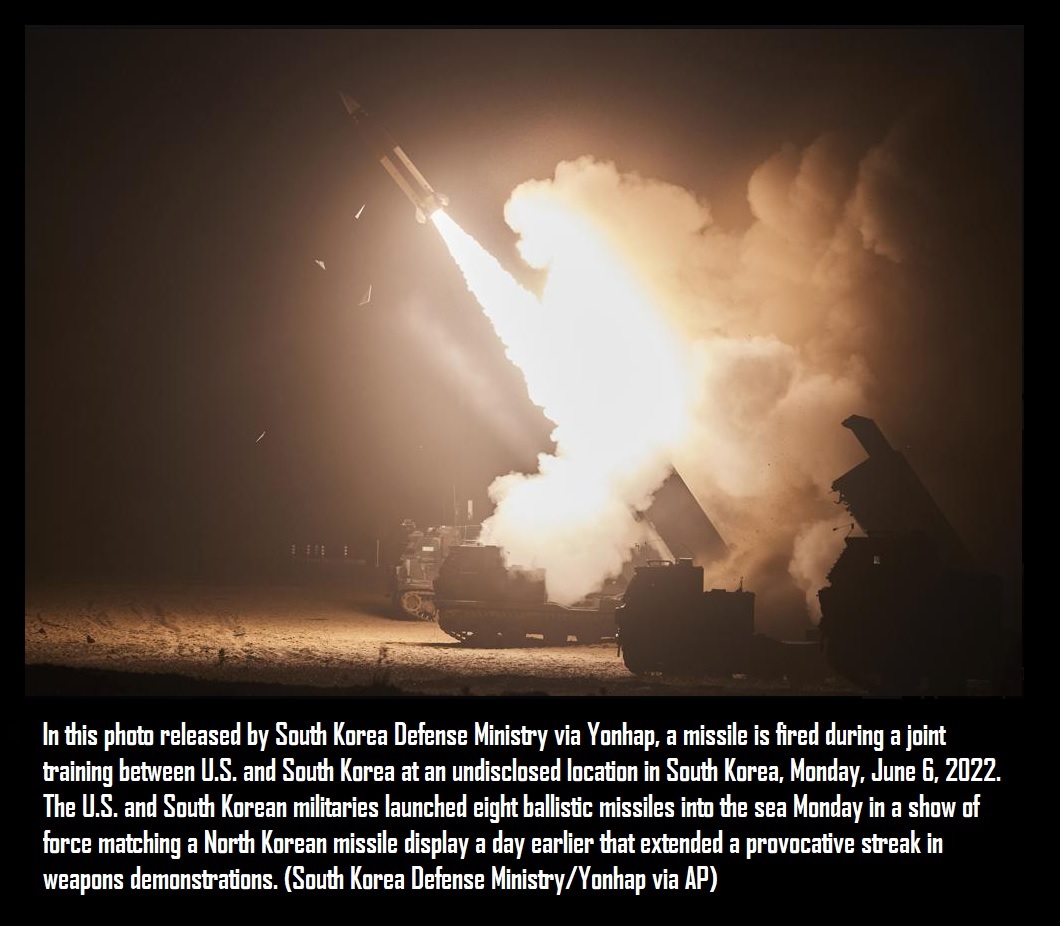
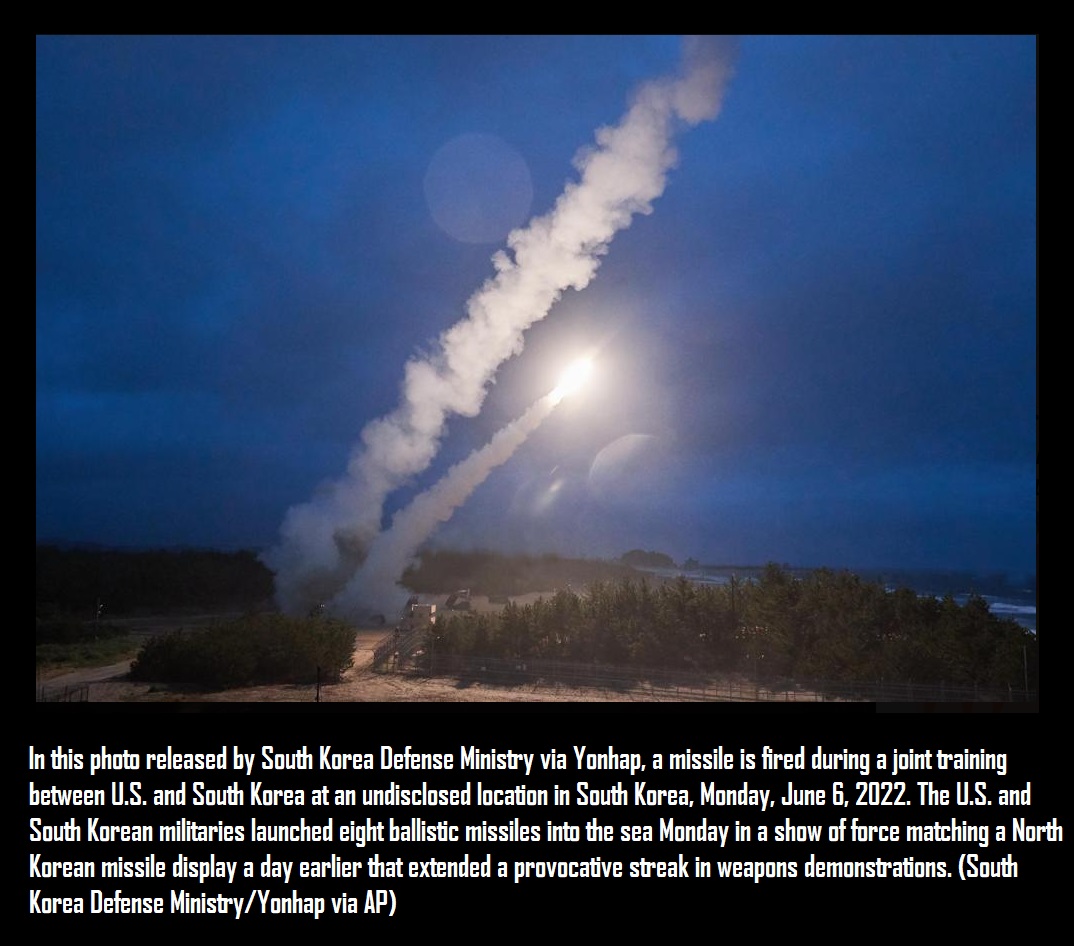
South Korea's National Security Adviser Kim Sung-han convened the standing committee of the NSC to discuss the latest missile launch. If necessary, President Yoon is reportedly going to chair a full meeting of the NSC himself... for the second time since he took office last month. Shin Ye-eun, Arirang News. ------ In a sharp response to missile tests by North Korea, the United States and South Korea fired eight ballistic missiles. This comes a day after North Korea launched eight short-range ballistic missiles following a South Korea-U.S. joint military exercise involving a U.S. aircraft carrier. A ground-to-ground Army Tactical Missile System (ATACMS) missile was launched at targets in the East Sea, also known as the Sea of Japan, in the early morning. Yonhap news agency reported that the militaries of South Korea and the United States fired eight surface-to-surface missiles over 10 minutes starting at 4:45 am. U.S. Indo-Pacific Command said the exercise included one U.S. Army missile and seven from South Korea. Watch this video for more details.
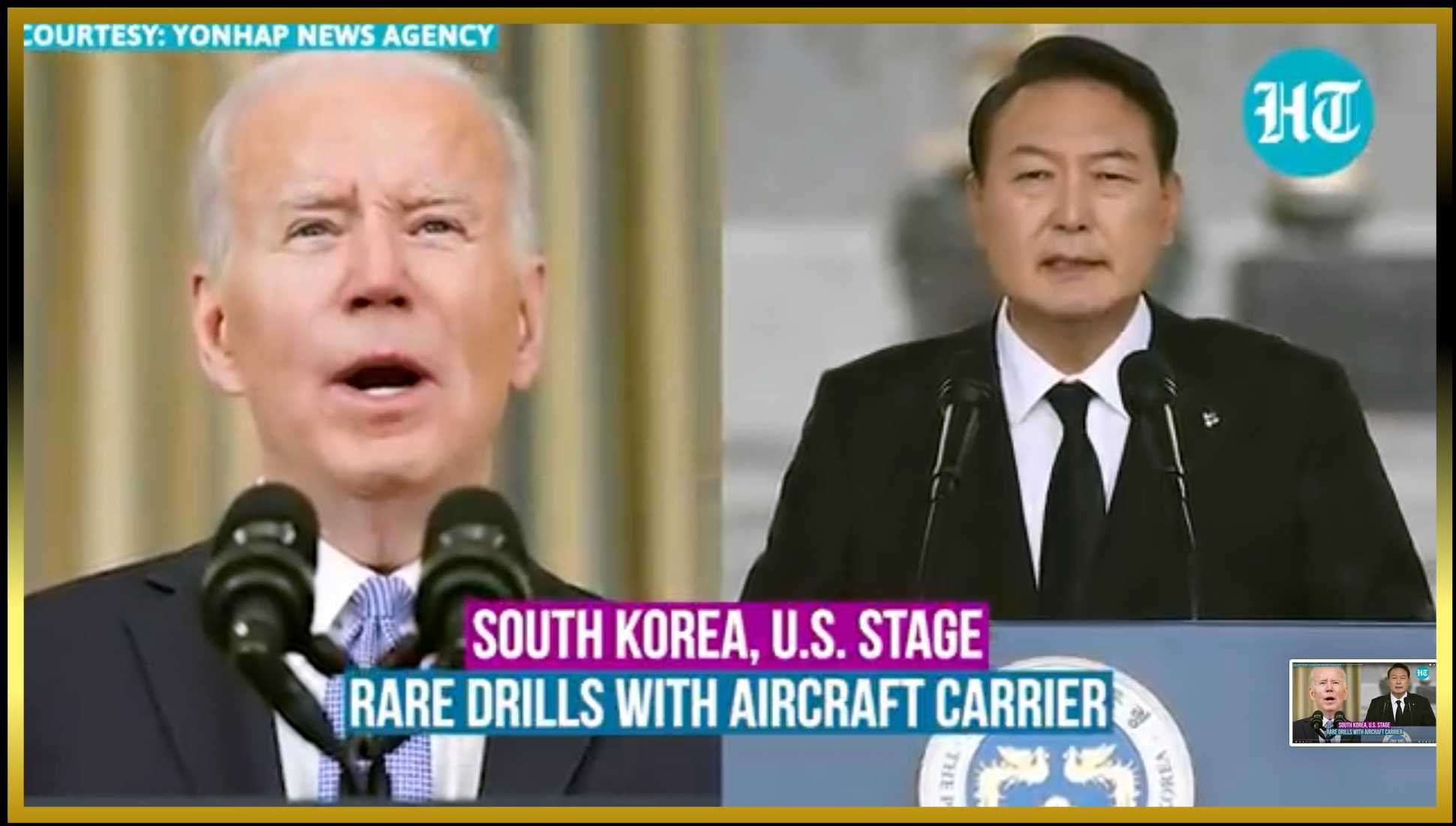
Japan PM: Missile launches by North Korea cannot be tolerated | S. Korea, US also respond | WION South Korea and the United States staged their first combined military drill involving an American aircraft carrier since 2017. On the other side, North Korea showed signs of resuming missile tests. Japan PM lashed out at the tests conducted by North Korea.
AP, June 6, 2022. SEOUL, South Korea (AP) — The U.S. and South Korean militaries launched eight ballistic missiles into the sea Monday in a show of force matching a North Korean missile display a day earlier that extended a provocative streak in weapons demonstrations.
The allies’ live-fire exercise involved eight Army Tactical Missile System missiles — one American and seven South Korean — that were fired into South Korea’s eastern waters across 10 minutes following notifications for air and maritime safety, according to South Korea’s Joint Chiefs of Staff and U.S. Forces Korea.
The tit-for-tat missile launches were aimed at demonstrating the ability to respond swiftly and accurately to North Korean attacks, the South Korean military said.
The South’s military on Sunday detected North Korea firing eight short-range missiles over 35 minutes from at least four different locations, including from western and eastern coastal areas and two inland areas north of and near the capital, Pyongyang, in what appeared to be a single-day record for the country’s ballistic launches.
It was North Korea’s 18th round of missile tests in 2022 alone — a streak that included the country’s first launches of intercontinental ballistic missiles in nearly five years. South Korean and U.S. officials also say North Korea is preparing to conduct its first nuclear test since September 2017 as leader Kim Jong Un pushes a brinkmanship aimed at cementing the North’s status as a nuclear power and negotiating economic and security concessions from a position of strength.
U.S. and South Korean forces conducted a similar live-fire exercise following North Korea’s previous ballistic launches on May 25, which South Korea’s military said involved an ICBM flown on medium-range trajectory and two short-range weapons. Those tests came as Biden wrapped up his trip to South Korea and Japan, where he reaffirmed the U.S. commitment to defend both allies.
South Korean President Yoon Suk Yeol during a speech marking the country’s Memorial Day on Monday said his government would pursue “fundamental and practical security capabilities” to counter North Korea’s growing nuclear weapons and missile threat.
“North Korea’s nuclear weapons and missile programs have grown to a point where they are not only a threat to the Korean Peninsula, but to Northeast Asia and world peace,” Yoon said at the National Cemetery in Seoul, saying his government would “sternly respond to any kind of North Korean provocation.”
Yoon, a conservative who took office in May, has vowed to strengthen the South’s defense in conjunction with its alliance with the United States. His goals include enhancing missile strike and interception capabilities and resuming large-scale military exercises with the United States, which were suspended or downsized in recent years to create space for diplomacy with Pyongyang or because of COVID-19.
Yoon’s dovish predecessor, Moon Jae-in, who had staked his five-year term on inter-Korean engagement, refrained from missile counter-drills after North Korea resumed ballistic missile tests in 2019 as its diplomacy with the United States fizzled.
North Korean state media have yet to comment on Sunday’s launches. They came after the U.S. aircraft carrier Ronald Reagan concluded a three-day naval drill with South Korea in the Philippine Sea on Saturday, apparently their first joint drill involving a carrier since November 2017, as the countries move to upgrade their defense exercises in the face of North Korean threats.
North Korea has long condemned the allies’ combined military exercises as invasion rehearsals and often countered with its own missile drills, including short-range launches in 2016 and 2017 that simulated nuclear attacks on South Korean ports and U.S. military facilities in Japan.
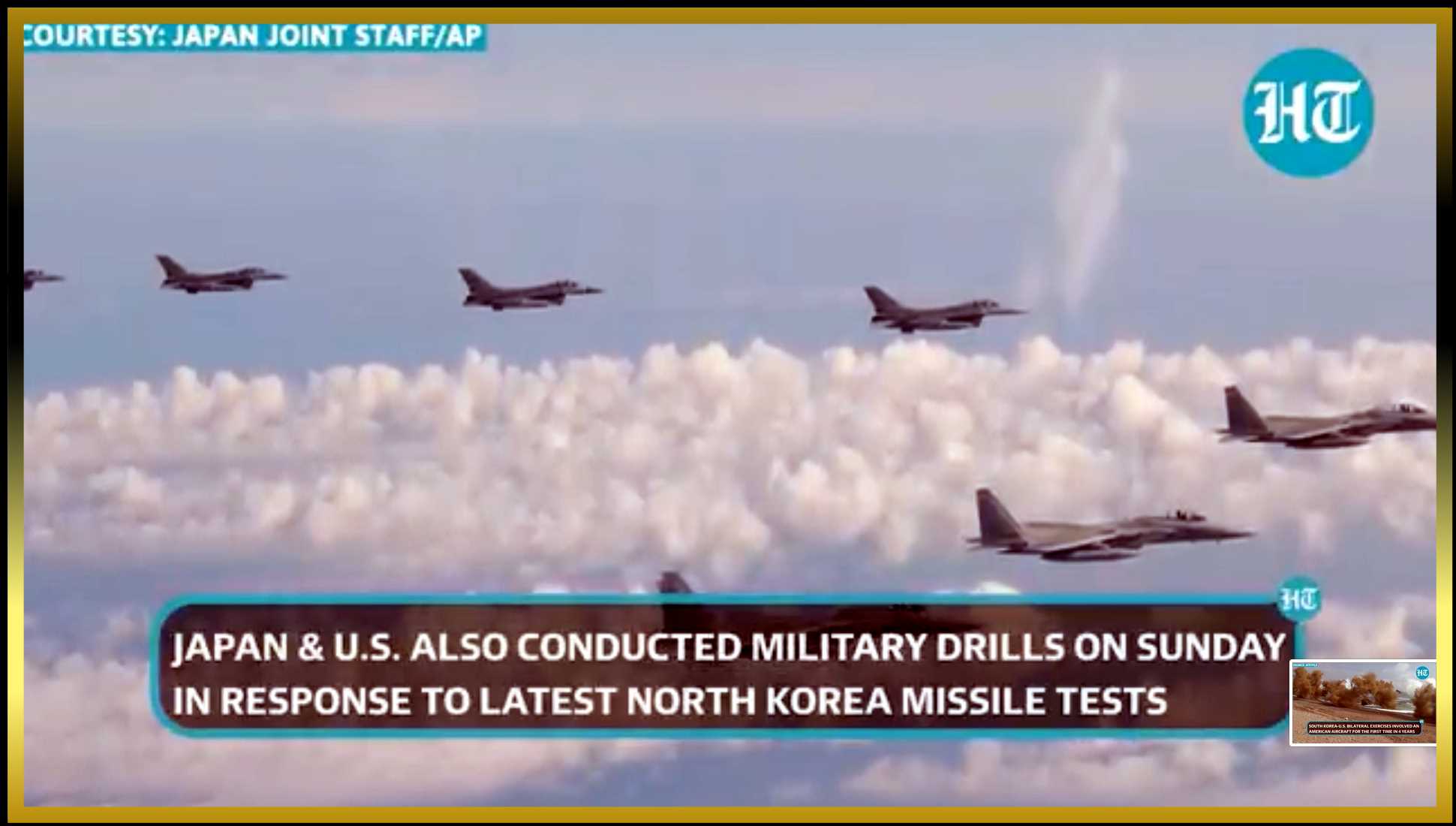
Hours after the North Korean launches, Japan and the United States conducted a joint ballistic missile exercise aimed at showing their “rapid response capability” and “strong determination” to counter threats, Japan’s Defense Ministry said.
The United States has vowed to push for additional international sanctions if North Korea conducts a nuclear test, but the prospects for meaningful new punitive measures are dim with the U.N. Security Council’s permanent members divided.
Russia and China vetoed a U.S.-sponsored resolution that would have imposed additional sanctions on North Korea over its latest ballistic tests on May 25, insisting that Washington should instead focus on reviving negotiations with Pyongyang.
Addressing the brewing animosity, Chinese Foreign Ministry spokesperson Zhao Lijian called for related nations to “maintain calm and exercise restraint, and avoid any actions that may aggravate tensions.”
Nuclear talks between Washington and Pyongyang have stalled since 2019 over disagreements in exchanging the release of crippling U.S.-led sanctions for the North’s disarmament steps.
Despite facing harsh challenges at home, including a decaying economy and a COVID-19 outbreak, Kim has shown no willingness to fully surrender an arsenal he sees as his strongest guarantee of survival.
His government has so far rejected the Biden administration’s offers for open-ended talks and is clearly intent on converting the dormant denuclearization negotiations into a mutual arms-reduction process, experts say. By KIM TONG-HYUNG. -------------------------------------------- In the first 4 weeks of 2022, North Korea conducted 7 missile tests. Missiles tested included a hypersonic glide vehicle, an intermediate range ballistic missile (IRBM) and various cruise missiles.
Fissile material production: Plutonium facilities, North Korea's plutonium-based nuclear reactors are located at the Yongbyon Nuclear Scientific Research Center, about 90 km north of Pyongyang.
One Soviet-supplied IRT-2000 research reactor, completed in 1967. Uranium irradiated in this reactor was used in North Korea's first plutonium separation experiments in 1975. Nevertheless, the primary purpose of the reactor is not to produce plutonium and North Korea has had trouble acquiring enough fuel for constant operation. The U.S. Department of Energy estimated that this reactor could have been used to produce up to 1–2 kg of plutonium, though the Joint Atomic Energy Intelligence Committee said that the amount was no more than a few hundred grams
Operational or successfully tested Hwasong-5 – initial Scud modification. Road-mobile, liquid-fueled missile, with an estimated range of 330 km. It has been tested successfully. It is believed that North Korea has deployed some 150–200 such missiles on mobile launchers. Hwasong-6 – later Scud modification. Similar to the Hwasong-5, yet with an increased range (550–700 km) and a smaller warhead (600–750 kg). Apparently this is the most widely deployed North Korean missile, with at least 400 missiles in use. Hwasong-7[202] – larger and more advanced Scud modification. Liquid-fueled, road-mobile missile with a 650 kg warhead. First production variants had inertial guidance, later variants featured GPS guidance, which improves CEP accuracy to 190–250 m.
Range is estimated to be between 1,300 and 1,600 km. Hwasong-9 is also known as Scud-ER in rest of the world is further development of Hwasong-6 with range of (1000–1000+ km) and is capable of hitting Japan.
Hwasong-10 – believed to be a modified copy of the Soviet R-27 Zyb SLBM. Originally believed to have been tested as the first or second stage of Unha, but debris analysis showed that the Unha used older technology than it is believed the Hwasong-10 uses. Also known under the names Nodong-B, Taepodong-X, Musudan and BM25, predicted to have a range of 2,500–4,000 km. A DoD report puts BM25 strength at fewer than 50 launchers.
Hwasong-11 – a short-range, solid-fueled, highly accurate mobile missile, modified copy of the Soviet OTR-21. Unknown number in service, apparently deployed either in the late 1990s or early 2000s (decade). Pukguksong-1 – a long-range, solid-fueled, SLBM. Also called the KN-11 by the Defense Department. Possibly derived from the Chinese JL-1 SLBM.
Pukguksong-2 – a long-range, land based development of the solid fueled Pukguksong-1. Also known as the KN-15.
Hwasong-12 – a medium-range, liquid-fueled, mobile missile. First tested in May 2017. also known as KN-17 outside of Korea, South Korean experts estimate range of 5000 to 6000 km based on successful test conducted in May.
Hwasong-14 – Also known as the KN-20, a long-range, road transportable ICBM, https://www.theguardian.com/world/2017/jul/04/north-korea-launches-ballistic-missile-japans-defence-ministry-says
2017, estimated range is 6,700–10,000 km (4,200–6,200 mi)
John Schilling estimates the current accuracy of the North's Hwasong-14 as poor at the mooted ranges which threaten US cities (which would require more testing to prove its accuracy). Michael Elleman has pointed out that the NHK video[223] which captured the descent of the reentry vehicle (RV) shows its failure to survive reentry. If the RV had survived reentry, the video would have shown a bright image all the way to impact in the sea. However a recent CIA assessment notes that North Korea's ICBM reentry vehicles would likely perform adequately if flown on a normal trajectory to continental U.S. targets. Hwasong-15 – 13,000 km range, successfully tested on November 28, 2017. KN-23 - 700 km range, Successfully tested on May 4, 2019. Similar to 9K720 Iskander. Demonstrated range of 800 kilometers on September 15, 2021. Untested KN-08 – Road-mobile ICBM. Also called the Hwasong-13 (HS-13). Maximum range >5,500 km (3,400 miles). The US Defense Department estimates at least 6 KN-08 launchers are in deployment. A modified version, the KN-14, was unveiled at a parade marking the 70th anniversary of the Workers Party of Korea. The missile development was halted due to engine problems.G
|



)
)
)
)
)
)
)
)
)
)
)
)
)
)
)
)
)
)
)
)
)
)
)
)
)
)
)
)
)
)
)
)
)
)
)
)
)
)
)
)
)
)
)
)
)
)
)
)
)
)
)
)
)
)
)
)
)
)
)
)
)
)
)
)
)
)
)
)
)
)
)
)
)
)
)
)
)
)
)
)
)
)
)
)
)
)
)
)
)
)
)
)
)
)
)
)
)
)
)
)
)
)
)
)
)
)
)
)